Opinions - Middle East and North Africa

What the SDF’s Miscalculations Meant for Turkey and Syria

What the SDF’s Miscalculations Meant for Turkey and Syria

by Mustafa Enes Esen, published on 19 January 2026
The ceasefire signed on January 18 between Damascus and the SDF was not the product of prolonged bargaining or mutual compromise. It was imposed by developments on the ground that had already stripped the SDF of its bargaining power. As such, the ceasefire agreement formalizes the collapse of the March 10 deal and largely marks the end of the SDF’s ability to shape outcomes in Syria.
An Iranian Collapse Would Pose Security Risks for Azerbaijan

An Iranian Collapse Would Pose Security Risks for Azerbaijan

by Rufat Ahmadzada, published on 14 January 2026
The protests in Iran are continuing to escalate. What started as a protest by traders against the fall in the value of the local currency, rising prices, economic mismanagement and worsening economic conditions in the country has quickly transformed into a growing movement for political change. This is evident from the chants of protestors and is threatening the legitimacy of the ruling clerical regime.
Syria’s Fate Still Hinges on Trump

Syria’s Fate Still Hinges on Trump

by Haşim Tekineş, published on 13 January 2026
Videos showed fighting erupting in residential areas as civilians fled en masse, while green buses later transported defeated fighters out of the city under a mediated evacuation arrangement. The Aleppo clashes in early January 2026 brought back grim memories of Syria's civil war, even as the new government in Damascus, led by President Ahmad al-Sharaa, claimed another military win against the Syrian Democratic Forces (SDF) in Aleppo.
The Role of Ideas in Turkey's Syria Policy: Disillusionment with Ideology or Transformation?

The Role of Ideas in Turkey's Syria Policy: Disillusionment with Ideology or Transformation?

by Haşim Tekineş, published on 7 January 2026
Turkey’s Syria policy is often portrayed as a case of foreign policy failure driven by ideology. According to this view, Ankara abandoned realism in favor of Islamist enthusiasm during the Arab Spring and later returned to pragmatism after paying significant political and strategic costs. While this narrative highlights an important shift, it relies on a simplified understanding of the relationship between ideas and foreign policy.
How Syria and Gaza Affect the Divide Between Israel and Turkey

How Syria and Gaza Affect the Divide Between Israel and Turkey

by Servet Akman, published on 6 January 2026
The fall of the Assad regime in Syria has opened a new chapter in Turkish–Israeli relations. For a long time, the Assad regime was a major security concern for Turkey. For Israel, it was “the devil they knew.” Israel focused on containing the Assad regime and Iran’s proxies, while Turkey’s military presence in Syria remained a secondary issue.
Syria’s Way Ahead: Prospects for a Ruined Economy

Syria’s Way Ahead: Prospects for a Ruined Economy

by Mehmet Demirbaş, published on 5 January 2025
On the eve of the civil war, Syria was a lower-middle-income country with steady growth and relatively stable macroeconomic indicators. Between 2000 and 2010, real GDP grew by an average of 4.8 percent annually, inflation averaged 4.9 percent. Trade accounted for 64 percent of GDP, and GDP per capita stood at 2,731 dollars in 2010.

Reports - Middle East and North Africa

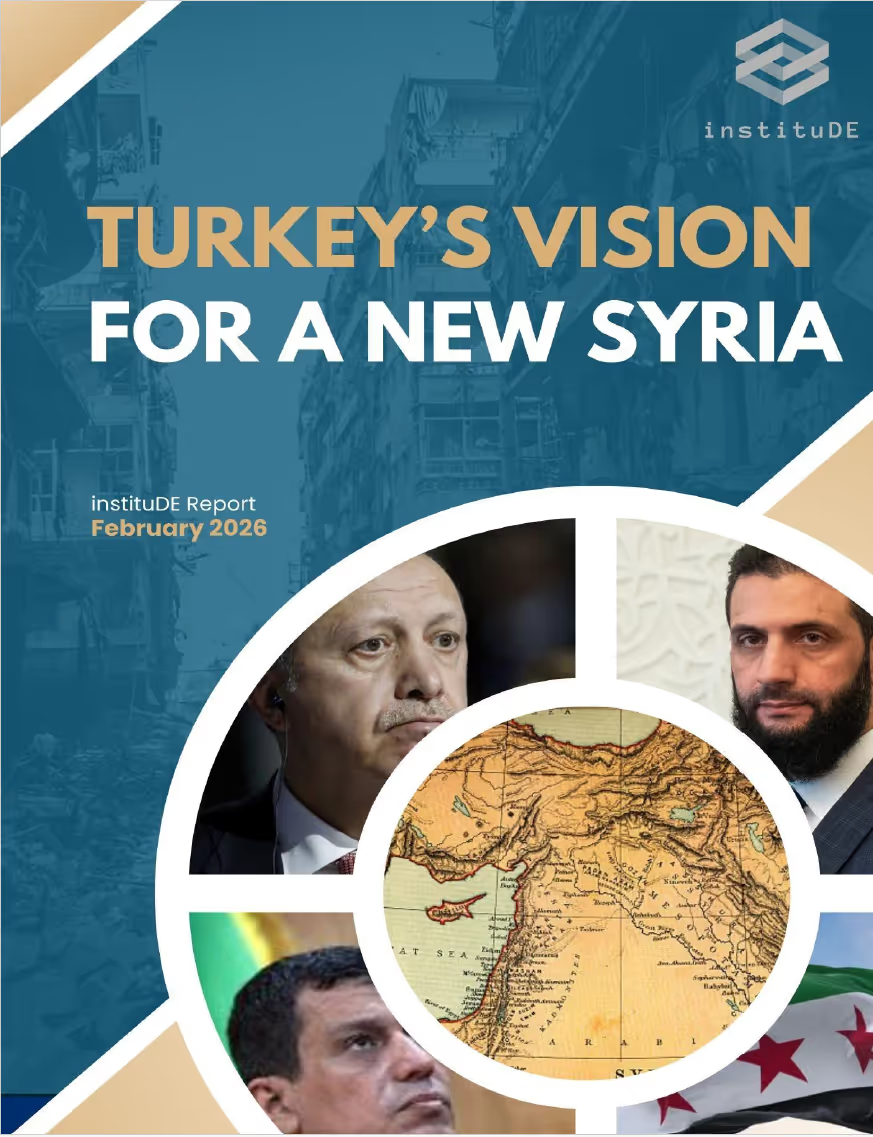
Turkey's Vision For a New Syria

Turkey's Vision For a New Syria

by Mustafa Enes Esen, Haşim Tekineş, Mehmet Demirbaş and Servet Akman, published on 14 February 2026
This report analyzes Turkey’s vision for Syria following the fall of the Assad family and the rise of the HTS under the leadership of Ahmad al-Sharaa. In this regard, it focuses on the foreign actors that, alongside Turkey, now have the greatest ability to shape Syria’s future: namely the United States and Israel.

Videos - Middle East and North Africa

Orta Doğu'da Şii Hilalinin Batışı

September 30, 2024
by Haşim Tekineş, published on 30 September 2024
instituDE Dış Politika Analisti Haşim Tekineş İsrail'in saldırısı sonucu Hizbullah lideri Hasan Nasrallah'ın öldürülmesinin bölge için doğuracağı sonuçlarını ele aldı.

Orta Doğu Savaşın Eşiğinde

September 24, 2024
by Haşim Tekineş, published on 24 September 2024
instituDE Dış Politika Analisti Haşim Tekineş Orta Doğu'da mevcut bulunan yakın savaş tehditini, İsrail-Hizbullah gerilimini ve durumun bölge ve Türkiye için etkilerini ele aldı.

Orta Doğu'da İstihbarat Savaşları

September 20, 2024
by Ali Dinçer and Haşim Tekineş, published on 20 September 2024
Bu yayınımızda Haşim Tekineş ve Ali Dinçer Almanya'nın sınır kontrolleri yapma kararını, Avrupa'da sığınmacı kaşıtı uygulama ve politikaları, İsrail'in Hizbullah üyelerine yönelik çağrı cihazlarını patlatma operasyonunu, İsrail-Hizbullah geriliminin ilerleyen dönemdeki olası seyrini ve Kanada siyasetinde yaşanan son gelişmeleri ele aldılar.

Mısır'la Yeni Bir Sayfa

September 5, 2024
by Ali Dinçer and Haşim Tekineş, published on 5 September 2024
Bu yayınımızda Ali Dinçer ve Haşim Tekineş Mısır-Türkiye normalleşmesini, Sisi'nin bu haftaki Türkiye ziyaretini ve Türkiye'nin BRICS'e katılma niyetini değerlendirdiler.

Gazze Orta Doğu'da Amerika'yı Bitirdi

August 24, 2024
by Haşim Tekineş, published on 24 August 2024
Haşim Tekineş Gazze Savaşı'nın Orta Doğu üzerindeki etkilerini Andreas Krieg adlı akademisyenin Mayıs 2024'te kaleme aldığı bir makaleyi özetleyerek anlatıyor. Gazze Savaşı Orta Doğu'da ABD'yi bitirdi mi?

Rusya İşgal Altında

August 16, 2024
by Ali Dinçer and Haşim Tekineş, published on 16 August 2024
Haftanın önemli uluslararası gündemlerinden Ukrayna'nın Rusya topraklarına girmesini, Gazze'de şiddetin devam edişini, ateşkes görüşmelerini, Biden'ın görevdeki son üç ayında Gazze savaşına dair adım atma olasılığı, Mahmut Abbas'ın Türkiye temasları ile ABD seçim sürecine dair son gelişmeleri ele aldılar.