Opinions - Middle East and North Africa

Three Phases of Turkish-American Relations in Syria

Three Phases of Turkish-American Relations in Syria

by Haşim Tekineş, published on 20 February 2026
The Syrian civil war has had a major impact on relations between Turkey and the United States. Syria has created both areas of cooperation and sources of tension between the two countries. As interests and the regional balance of power shifted, the nature of the relationship also changed.
Why Turkey Chooses Continuity Over Change in Iran

Why Turkey Chooses Continuity Over Change in Iran

by Mustafa Enes Esen, published on 6 February 2026
Ankara has repeatedly made clear that it opposes a military intervention against Iran. President Recep Tayyip Erdoğan stated again on February 5: “We are doing everything to prevent these tensions between the United States and Iran from driving the region into a new conflict and chaos. We clearly expressed our opposition to a military intervention in Iran.” To this end, the Turkish government has also formed a sort of ad hoc alignment with regional countries to lobby the Trump administration against war.
Would Turks in Iran Pursue Independence Amid Turmoil? A Framework Analysis

Would Turks in Iran Pursue Independence Amid Turmoil? A Framework Analysis

by Mehmet Akif Koç, published on 21 January 2026
Iran built an extensive sphere of influence across the Middle East between 2003 and 2023. This influence has largely—at least for the time being—collapsed following the 2023 war in Gaza with Hamas, the 2024 conflict in Lebanon with Hezbollah, and the December 2024 fall of Syria’s Baath regime. Together, they formed the backbone of Iran’s regional influence.
When Trump Moves On: Syria’s Lesson for Venezuela

When Trump Moves On: Syria’s Lesson for Venezuela

by İmdat Öner and Mustafa Enes Esen
The experience of the Syrian Democratic Forces (SDF) should be a warning for Venezuela’s opposition. Not because Syria and Venezuela are the same, but because they reveal how U.S. policy actually works when hard choices are made. In both cases, Washington has shown that it values stability and workable partners over past alliances or political sympathy. That logic matters far more than the specifics of either country.
What the SDF’s Miscalculations Meant for Turkey and Syria

What the SDF’s Miscalculations Meant for Turkey and Syria

by Mustafa Enes Esen, published on 19 January 2026
The ceasefire signed on January 18 between Damascus and the SDF was not the product of prolonged bargaining or mutual compromise. It was imposed by developments on the ground that had already stripped the SDF of its bargaining power. As such, the ceasefire agreement formalizes the collapse of the March 10 deal and largely marks the end of the SDF’s ability to shape outcomes in Syria.
An Iranian Collapse Would Pose Security Risks for Azerbaijan

An Iranian Collapse Would Pose Security Risks for Azerbaijan

by Rufat Ahmadzada, published on 14 January 2026
The protests in Iran are continuing to escalate. What started as a protest by traders against the fall in the value of the local currency, rising prices, economic mismanagement and worsening economic conditions in the country has quickly transformed into a growing movement for political change. This is evident from the chants of protestors and is threatening the legitimacy of the ruling clerical regime.

Reports - Middle East and North Africa

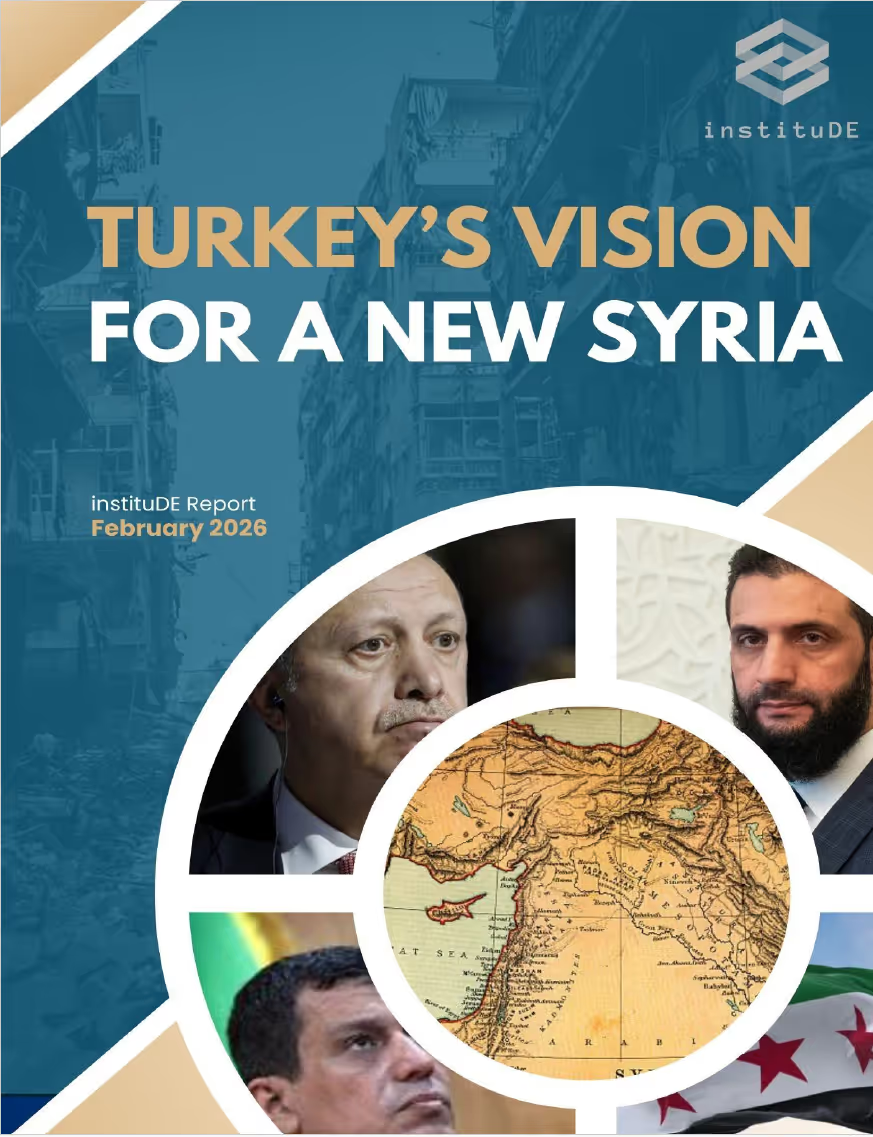
Turkey's Vision For a New Syria

Turkey's Vision For a New Syria

by Mustafa Enes Esen, Haşim Tekineş, Mehmet Demirbaş and Servet Akman, published on 14 February 2026
This report analyzes Turkey’s vision for Syria following the fall of the Assad family and the rise of the HTS under the leadership of Ahmad al-Sharaa. In this regard, it focuses on the foreign actors that, alongside Turkey, now have the greatest ability to shape Syria’s future: namely the United States and Israel.

Videos - Middle East and North Africa

Haftanın Ortası - Suikastler, Savaşlar ve Seçimler

August 1, 2024
by Ali Dinçer and Haşim Tekineş, published on 1 August 2024
Ali Dinçer ve Haşim Tekineş'in haftanın öne çıkan uluslararası gündemlerini ele aldıkları yeni yayınımızda, İsrail'in Hamas liderlerine yönelik suikast saldırıları, Erdoğan'ın İsrail'e yönelik açıklamaları, bölgesel savaş senaryoları ve ABD seçim sürecine ilişkin son gelişmeler değerlendirildi.

Haftanın özeti: Trump'a Suikast Girişimi, İngiltere'de Yeni İktidar ve Suriye'yle Normalleşme

July 20, 2024
by Haşim Tekineş and Ali Dinçer, published on 20 July 2024
Ali Dinçer ve Haşim Tekineş Trump'ın suikastten kurtulmasının ardından kazanma olasılığının çok yüksek görülmesini, #İngiltere'de kurulan yeni hükümet ve sağ partilerin durumunu ve Türkiye-#Suriye normalleşme sürecini ele aldılar.

BOP: Nedir Bu Büyük Orta Doğu Projesi

June 26, 2024
by Haşim Tekineş, published on 26 June 2024
instituDE Dış Politika Analisti Haşim Tekineş Büyük Orta Doğu Projesi'nin ne anlama geldiğini ve içeriğini ele aldı.

Future of Terrorism in the Era of Hegemonic Rivalry

May 1, 2024
Hasim Tekines discussed the current state of radical terrorism, particularly ISIS and al-Qaeda with Research Associate Professor Dr. Mahmut Cengiz.

Ortadoğu Isınırken 3. Dünya Savaşına Ne Kadar Yakınız?

April 20, 2024
Ramazan F. Güzel'in hazırladığı Tv FOCUS GÜNDEM KONUĞU: Dış Politika Uzmanı/ Institute for Diplomacy Economy'den Dış Politika Uzmanı Haşim Tekineş @hasimtekines : İran İsrail geriliminin perde arkasında yaşananlar, - Yaşananlar bir tiyatro muydu, yoksa başka dinamikler mi var? - Gerilimin İran, İsrail, Netanyahu, Molla Rejimi için kazanımları ve Filistin'in konumu. - Gerilim bölgeye sıçrayıp bir 3. Dünya Savaşına yol açar mı, bunu isteyenler var mı? - Böyle bir savaştan Türkiye nasıl etkilenir ve neler yapmalı...?

Moskova ile Ankara’nın Ortak Zaafı

March 25, 2024
by Haşim Tekineş, published on 25 March 2024
instituDE Dış Politika Analisti Haşim Tekineş katıldığı programda Moskova'da IŞiD tarafından 22 Mart'ta düzenlenen terör saldırısını Türkiye'yi ilgilendiren boyutlarıyla anlattı.