Israel and the United States launched Operations Roaring Lion and Epic Fury to degrade Iran’s military capabilities, dismantle its nuclear program, and end Tehran’s support for proxies in the Middle East. Since then, Iranian retaliatory strikes have transformed the conflict into a regional war. The joint operations also undermine Iran’s coercive apparatus used to control its people, such as the IRGC, Basij, and the police. Overall, these operations may reduce Iran’s standing in the region for decades to come.
As part of its retaliatory measures, the Iranian regime is engaging in missile and drone strikes against its neighbours, particularly the Gulf Arab states. It is targeting mostly civilian infrastructure such as airports, hotels, city centres, oil installations, and water resources, as well as the U.S. military facilities in the Gulf region. Ballistic missile strikes aimed at the Incirlik airbase, jointly used by the Turkish and U.S. militaries, were intercepted by NATO.
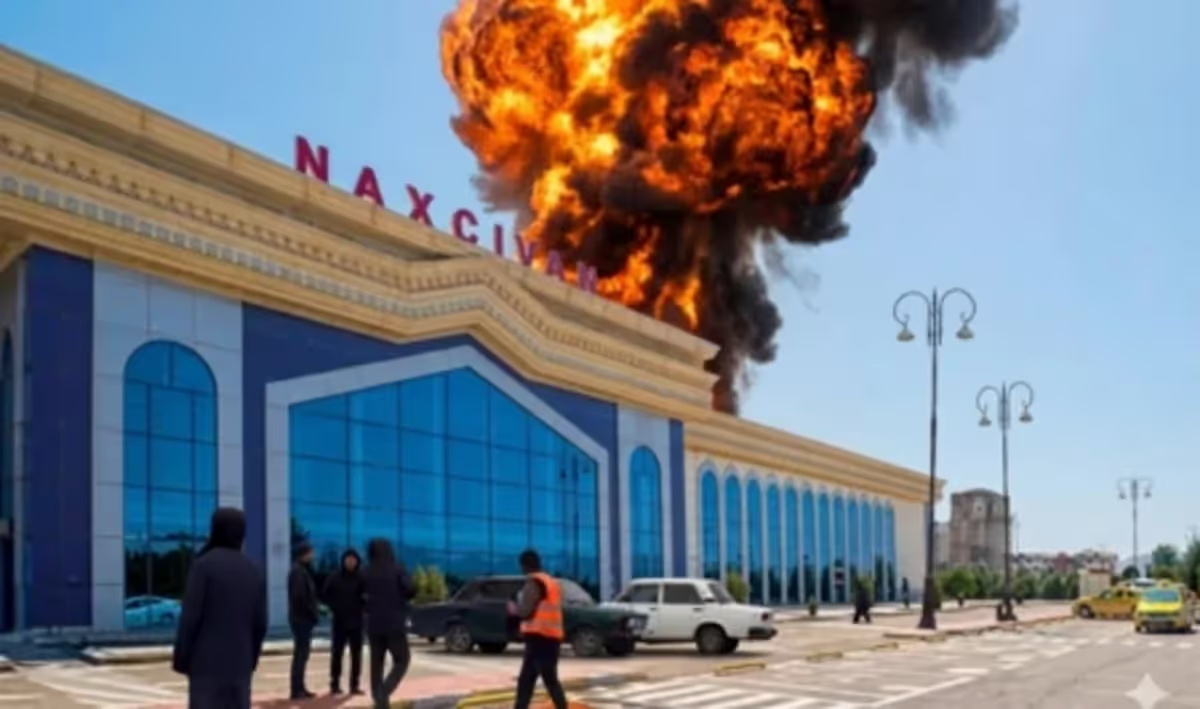
These strikes are viewed as part of Iran’s strategy to target the countries where the U.S. military operates or is stationed. However, Azerbaijan’s Nakhchivan exclave contains neither U.S. nor other foreign military bases, contrary to the Iranian official narrative. What motivated the Irnian regime to target a civilian airport and a school in Nakhchivan on 5 March?
AZERBAIJANI REACTION TO IRANIAN STRIKES
Iran used four Arash 2 drones in its 5 March strike on Nakhchivan International Airport, one of which fell close to a school in a nearby village. The airport is the sole direct communication link between the Nakhchivan exclave and the rest of Azerbaijan. In a statement outlining defensive actions to protect the country’s sovereignty and territorial integrity, the Azerbaijani Ministry of Defence reported that the drones were fired from Iranian territory. Despite Azerbaijan’s official position of neutrality in the Iran conflict and the fact that its airspace is not used against Iran, civilian infrastructure in Nakhchivan, including a school, was nonetheless targeted. These Iranian strikes also contradicted the Iranian regime’s assertions that it only targets nations from which its territory is supposedly facing U.S. attacks or that have U.S. military bases, as there are no foreign military bases in Azerbaijan.
Azerbaijani President Ilham Aliyev branded the drone attacks by Iran a “terrorist act” and ordered the military to be put on high alert, while the Azerbaijani Foreign Ministry summoned the Iranian ambassador. Azerbaijan also emphasized that the Iranian side must carry out a swift investigation. As part of its retaliatory measures, Baku closed the Azerbaijan-Iran border checkpoints to all vehicles, including international carriers, cutting off the Iran-Russia land bridge via Azerbaijan, which has been seen as a vital transport link for the Iranian regime since the start of the war. Moreover, the order was given for Azerbaijani diplomats to be evacuated from Iran for safety reasons. Azerbaijan also closed the southern part of its airspace and Baku-Nakhchivan flights were diverted to Igdir in Turkey.
TEHRAN DENIED RESPONSIBILITY
In phone calls with his Azerbaijani counterpart, Iranian Foreign Minister Abbas Araghchi claimed that Iran did not attack Nakhchivan and that the incident would be investigated. Four days after the strikes, Iranian President Masoud Pezeshkian called Azerbaijan’s President Aliyev and made the same claim that Iran was not involved in the attack and the matter would be investigated. Esmail Baghaei, the spokesperson for Iran’s Foreign Ministry, further advanced Iran’s conspiratorial claims, saying that the attacks on Azerbaijan, Turkey and Cyprus were “false flag” operations. Nonetheless, in a post on his X account on 11 February Mohammad Marandi, who acts as an English-language mouthpiece for the regime, described the Gulf Arab states and Azerbaijan as targets of what he called “the day of retribution” planned before the Iran war, indicating that the Nakhchivan strikes were a pre-planned option for the Iranian regime in the event of war.
Concurrently, Azerbaijan has provided humanitarian assistance to ethnic Azerbaijanis in Iran. Following the telephone conversation between the two countries’ presidents, Pezeshkian and Aliyev, Azerbaijan has resumed flights to Nakhchivan and reopened cargo transit through the Azerbaijan-Iran border.
On the other hand, some Turkish media outlets alleged that Azerbaijan supports Israel in the war against Iran. Baku strongly rejected these allegations, denouncing them as disinformation and expressing concern over their circulation in Turkish media. It also reiterated that its territory would not be used for attacks against Iran.
WHY DID IRAN TARGET NAKHCHIVAN?
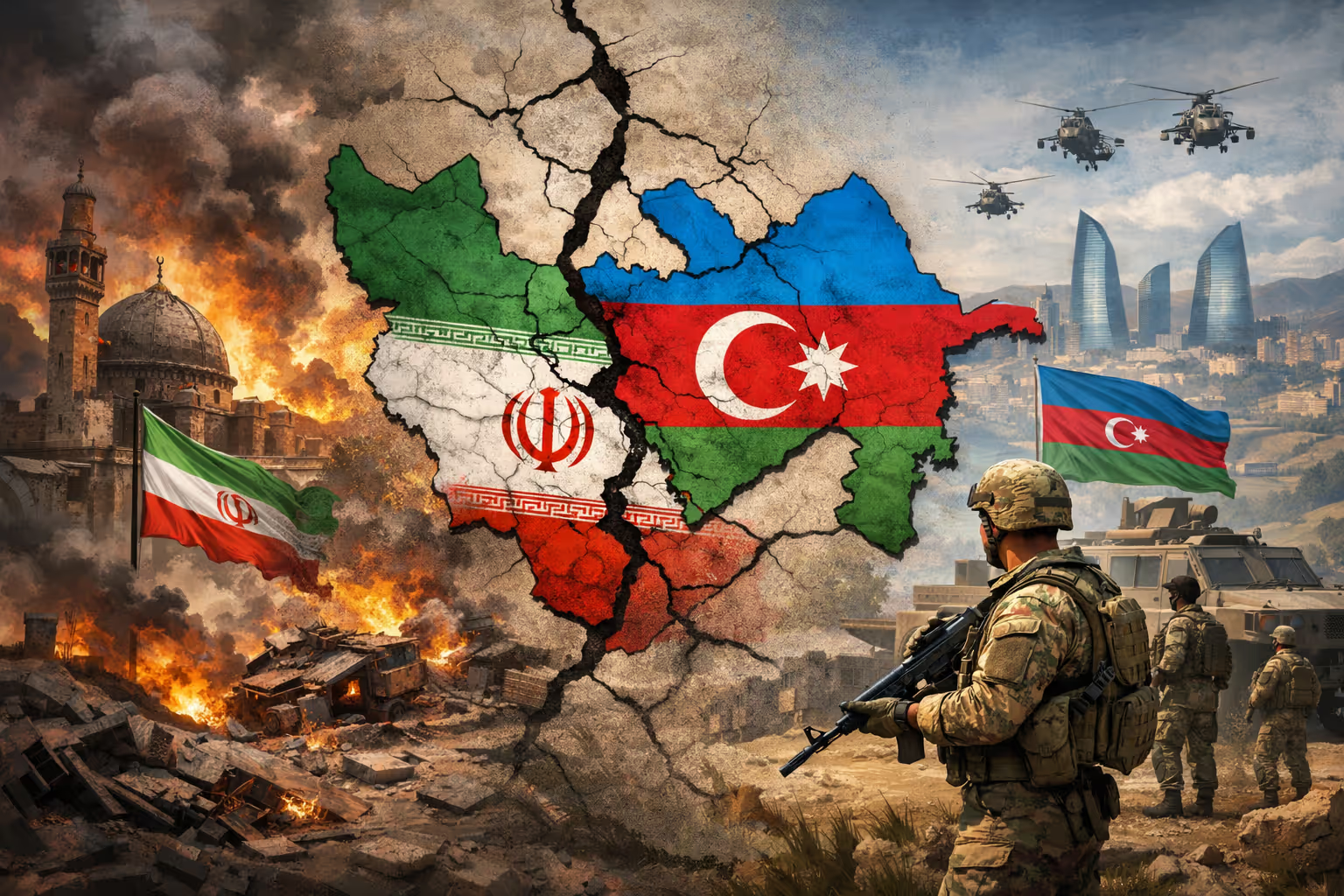
Iran’s drone assaults on Nakhchivan, where there are no foreign military installations, can be understood within the context of the regime carrying out military strikes on neighbouring countries it deems to be “enemies”. The relationship between Iran and Azerbaijan has historically been strained. Tehran seeks to extend its influence into Baku, given the presence of a significant population of Azerbaijanis in Iran. The conflicting national identities and differing foreign policy goals lead to conflicts in their bilateral relations.
The drone attacks should be considered within the context of the post-2020 geopolitical shifts in the South Caucasus, and in particular the peace process between Armenia and Azerbaijan mediated by U.S. President Donald Trump. On 8 August 2025, the historic Washington Peace Declaration was signed. The most significant provision of this declaration relates to the Zangezur Corridor, which would run from Azerbaijan through southern Armenia to Azerbaijan’s Nakhchivan exclave with U.S. participation, and was renamed the Trump Route for International Peace and Prosperity (TRIPP). Nakhchivan plays a central role in the TRIPP project as well as the wider Middle Corridor initiative, anchoring durable peace in the South Caucasus and creating an alternative link bypassing Iran and providing access to Turkey. Thus, the Iranian regime’s deliberate attacks on Nakhchivan may be a pre-planned geopolitical move to test Azerbaijan and send a message.
Although future attacks cannot be excluded, Azerbaijan is determined to protect and uphold its sovereignty through military readiness and the disruption of the Iran-Russia land transit route. The primary motivation behind Baku’s response to the attacks was to convey that it would not permit a second or third assault, as enduring such attacks, akin to the daily experiences of the Gulf Arab states, is not an option for Azerbaijan.




.svg.avif)