On October 27, Israelis voted in the first general election since the Hamas attacks of October 7, 2023. The campaigns focused mainly on domestic issues, including accountability for the failures of October 7, military service for the ultra-Orthodox (Haredim), and the cost of living. The election did not produce a majority for either bloc, and coalition negotiations may not yield a new government.
There is a reason foreign policy was not a major point of contention. On Gaza, Lebanon, Syria, and Iran, Israel's main parties share the same basic approach and differ mainly in tone. This continuity has implications for Turkey, whose regional policies have increasingly diverged from Israel's since the fall of the Assad regime in December 2024. Whatever government emerges in Israel, tensions between the two countries are likely to persist.
In this regard, Turkey's National Intelligence Academy (MİA), which operates under the National Intelligence Organization (MİT), has recently published a report titled The Anatomy of Israeli Expansionism. The report shows that some of Ankara's leading decision makers see Israel as an adversary that needs to be countered, regardless of who is in charge in Tel Aviv.
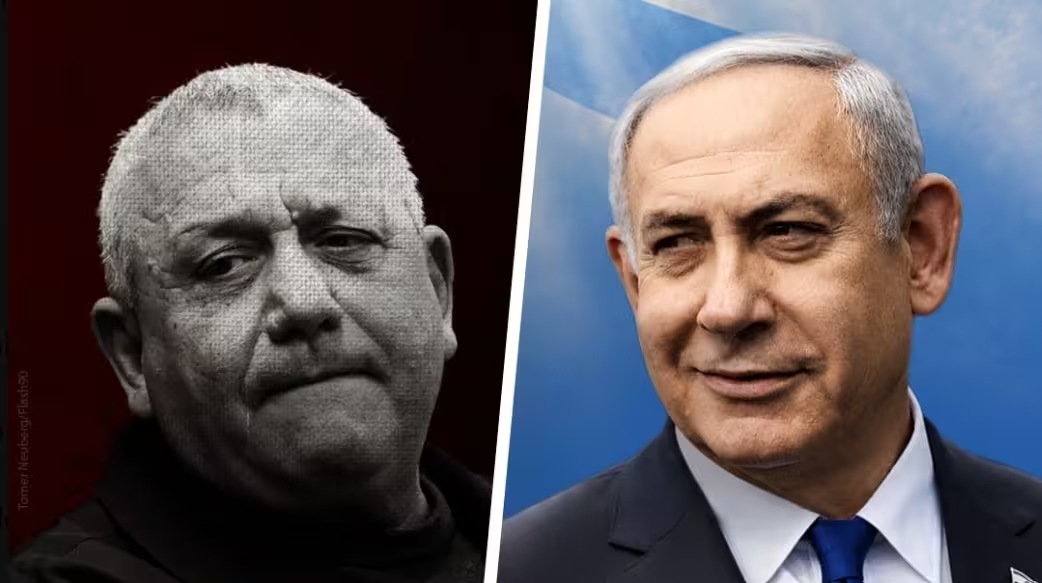
According to preliminary results, Netanyahu's right-wing bloc stood at 53 seats, eight short of the 61 needed for a majority. The bloc led by former military chief Gadi Eisenkot and his "Yashar!" party had 48, and the Arab parties a combined 19. The final count may shift a seat or two, but the overall picture is unlikely to change.
Even so, Netanyahu won the backing of an unexpected majority of Jewish Israelis, while Eisenkot's bloc fell short of the tight race pre-election polls had forecast. Turnout reached its highest level in more than two decades, driven in part by Arab citizens, whose parties are on course for a record result. Without the Arab parties, neither bloc can reach the 61 seats needed to form a government on its own.
Five scenarios lie ahead. The first is a unity government of Netanyahu and Eisenkot, even though "Yashar!" ruled it out during the campaign. The second is an Eisenkot-led coalition with the Arab parties as full members, a difficult step that would break his campaign promises. The third is a Netanyahu government built on defectors from the opposition bloc, which looks unlikely but not impossible. The fourth is an Eisenkot minority government with the Arab parties outside the cabinet but supporting it in the Knesset. The fifth, a likely scenario, is a return to the polls next year, with Netanyahu staying on as caretaker prime minister.
Despite the uncertainty in Israeli politics, one thing is clear. The identity of the next prime minister matters little for Israel's foreign policy. Netanyahu and Eisenkot differ slightly on how to carry out Israel's regional policies, but none of their differences touches the core of its regional posture. An Eisenkot government would still strike in Syria, hold positions in southern Lebanon, and treat Iran as an existential threat.
Netanyahu's hawkish policies are well known, but Eisenkot is no dove either. He ran the military's Operations Directorate during the 2006 war in Lebanon, and as head of the Northern Command, he spelled out what became known as the Dahiya doctrine. It called for the use of disproportionate force against every Lebanese village from which rockets were fired, treating such villages as military bases rather than civilian areas. This logic has shaped Israel's campaigns ever since, including in Gaza. Eisenkot later served as chief of staff and, after October 7, sat in Netanyahu's war cabinet.
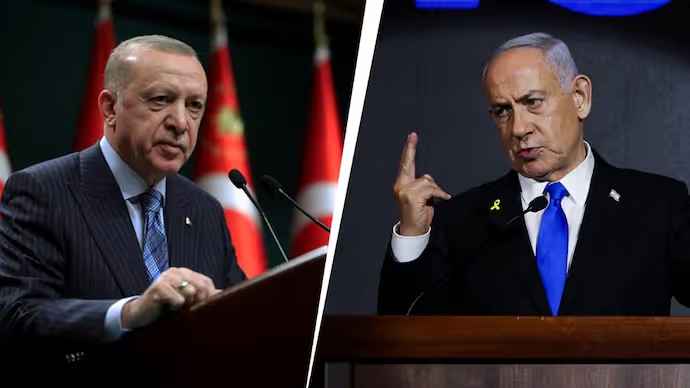
After the Hamas attacks of October 7, 2023, Turkish President Erdoğan, like many others, wrongly assumed that Netanyahu's days in power were numbered. This assumption helps explain Erdoğan's heated tone toward Netanyahu, whom he went so far as to compare to Hitler. Ankara seems to have judged the cost of this rhetoric to be low. Hostility toward Israel could be directed at Netanyahu personally, a future Israeli government would allow a fresh start, and the rhetoric would play well at home.
Washington, for its part, has played down the feud. Tom Barrack, the US ambassador to Turkey and special envoy for Syria, has repeatedly described the exchanges between Erdoğan and Netanyahu as "merely rhetoric" and predicted at the Antalya Diplomacy Forum in April that it would fade. In his view, relations between the two countries are better than their leaders' statements suggest, and their exchanges are mostly aimed at domestic audiences.
This view is not without merit. Trade and security ties remain in place despite some setbacks. Among the realistic alternatives, Netanyahu is also the most pragmatic interlocutor for Ankara. Once a government is formed, anti-Turkish rhetoric in Israel may therefore soften somewhat, though this is far from certain. The opposition offers no more favorable position on Turkey. Naftali Bennett, a leading figure in Eisenkot's bloc, declared in February that Turkey is "the new Iran."
Nonetheless, relations between Turkey and Israel are unlikely to improve dramatically anytime soon, and the National Intelligence Academy's report shows why. Published in Turkish, the report is an open source that reflects the thinking of some influential pro-government circles in Turkish intelligence and the ruling AKP. It is also the most recent and most detailed public account to date of how Turkish intelligence views Israel. The academy is part of Turkey's intelligence service, MİT, which has gained considerable influence over the country's domestic and foreign policy over the past decade.
The report provides a diagnosis. It finds that Israeli politics itself has shifted. In its words, the radical right, once on the margins of the political system, "has settled at the center of Israeli politics," and its growing appeal among younger generations "shows that expansionism will not be limited to a particular leadership." A possible change of government, the report adds, "will not on its own resolve the legal violations on the ground."
It then describes the rivalry between Turkey and Israel as a clash between two views of regional order. According to the report, Ankara wants neighbors that are strong and control their own territory, while Israel prefers weak and divided neighbors that allow it to intervene when it chooses. As a result, every gain in Turkish influence limits Israel's freedom of action. The report therefore treats the rivalry as lasting rather than temporary, identifying Syria as the place where the two views clash most directly. It also points to competition in the Eastern Mediterranean, in the Horn of Africa, where Israel became the first country to recognize Somaliland, and over trade routes such as the India–Middle East–Europe Economic Corridor (IMEC).
Based on this diagnosis, the report sets out general principles for Turkey. First, Turkey should not answer every Israeli move in kind. Second, it should not try to replace Israel as the dominant power in the region. Instead, it should help neighboring countries build stronger states and security forces, support closer regional cooperation, and prevent ethnic and religious divisions from inviting foreign intervention.
The report then turns to specific countries. On Palestine, Turkey should continue supporting a two-state solution and help protect the land, people, and institutions a future Palestinian state would need. On Lebanon, it should support the country's borders and its government's authority. On Syria, it should help rebuild a central government strong enough to control its own territory. The report also links Israel to Turkey's domestic "Terror-Free Turkey" peace process with the PKK. It argues that better relations among Turks, Kurds, and Arabs would make it harder for Israel to exploit ethnic divisions in the region.
Finally, the report looks at the wider region. It warns that regional security could come to depend entirely on networks built around Israel, such as US support, normalization agreements with Arab states, and Israel's integration into US Central Command. Turkey should ensure that no security, energy, or trade arrangement that excludes it becomes the only option. The aim is to prevent Israel from turning its military power and US backing into unlimited freedom of action. The report argues that Israel's aggressive policies make this easier by pushing other countries to seek new partners. One example is the Mecca Joint Defense Agreement, which Turkey signed with Saudi Arabia and Pakistan in August. According to the report, Turkey's advantage is its ability to work with several partners at once, from NATO to the Gulf states and Pakistan. On trade, it recommends competing with IMEC through Turkey's own routes, the Development Road through Iraq and the Middle Corridor to Central Asia.
As the National Intelligence Academy's report argues, a change of leadership in Israel is unlikely to alter its foreign policy. (For Israel, however, a change of leadership in Ankara would make all the difference.) Tensions between Turkey and Israel are therefore likely to persist for the foreseeable future. Syria, where both countries are active and pursue opposing goals, remains the most dangerous arena. Preventing an escalation there will require sustained American engagement with both sides, rather than dismissing the dispute between Turkey and Israel as mere political theater.