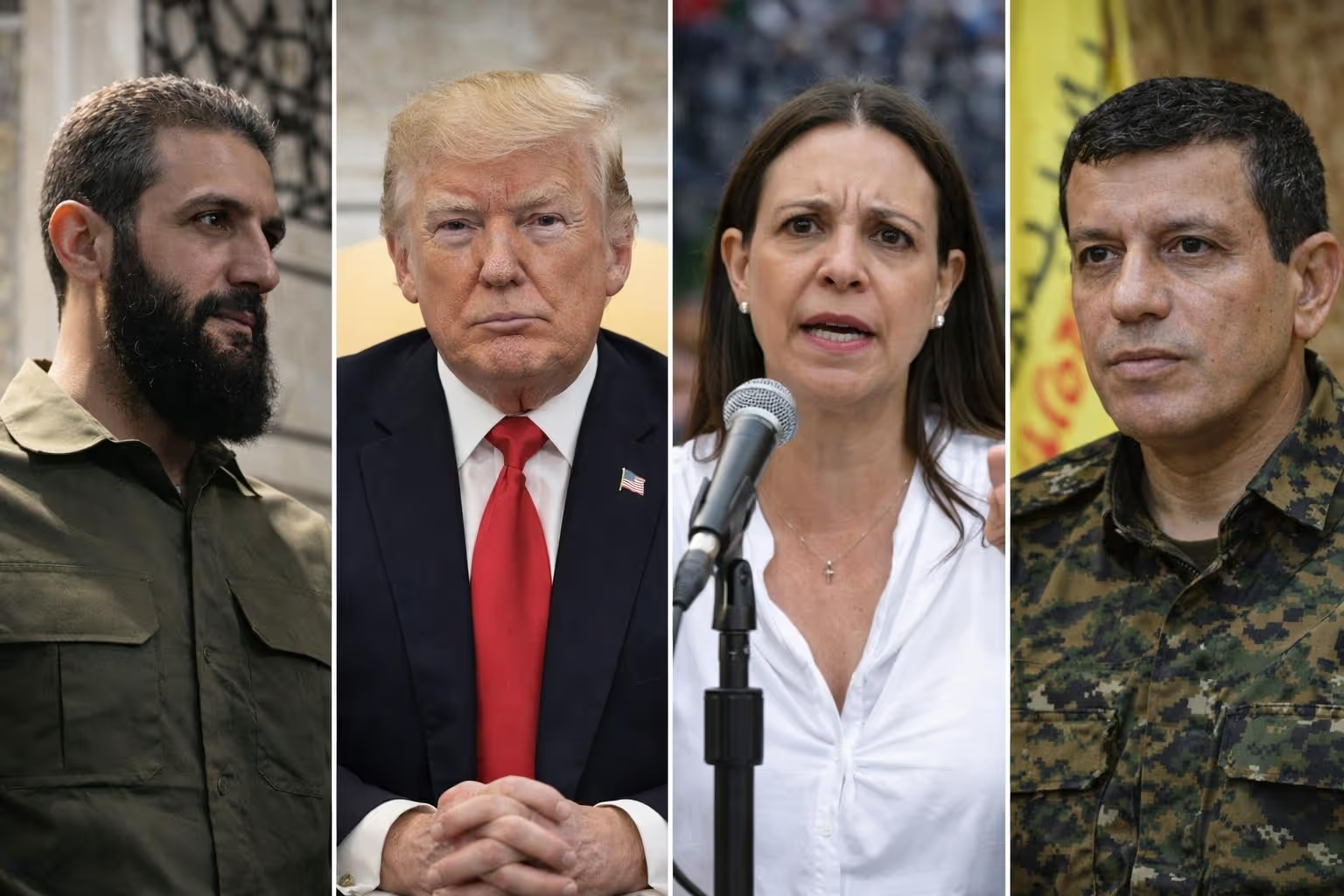
The experience of the Syrian Democratic Forces (SDF) should be a warning for Venezuela’s opposition. Not because Syria and Venezuela are the same, but because they reveal how U.S. policy actually works when hard choices are made. In both cases, Washington has shown that it values stability and workable partners over past alliances or political sympathy. That logic matters far more than the specifics of either country.
For years, the SDF was Washington’s most reliable partner in Syria. It fought ISIS on the ground, paid a heavy price in lives, and ended up controlling key territory, including oil fields and detention camps. That record led many in the SDF to believe their relationship with the United States was solid and lasting. It turned out not to be. Once the civil war phase ended and a new government took shape in Damascus, promising moderation, centralized authority, and cooperation, Washington recalibrated and moved on.
This shift was not driven by emotion or loyalty. It reflected priorities. Under President Trump, U.S. foreign policy has consistently leaned toward stability and ease of management rather than long-term commitments to partners. In Syria, Washington concluded that engaging a former jihadist-led government that pledged moderation was preferable to remaining tied to an alliance that had become increasingly complicated and politically costly.
That same logic is now visible in Venezuela. After Nicolás Maduro was removed, Washington did not seize the moment to empower the democratic opposition or attempt a clean break with the old system. Instead, Trump chose to work with Delcy Rodríguez, a central figure of the Maduro era and a clear remnant of the old regime. The decision was telling. Rather than risking uncertainty, fragmentation, or institutional collapse, Trump opted for continuity and control. Delcy was not selected because she represented change, but because she represented a form of stability without rupture—someone embedded in the system, yet capable of delivering compliance.
This choice matters for Venezuela’s opposition. Many still assume U.S. support is inevitable and that Washington will eventually push decisively for regime change. Syria suggests a different outcome is entirely possible. If Trump was willing to work with a jihadist-rooted government in Damascus in the name of stability, there is little reason to believe he would categorically refuse to engage a narco-linked regime in Caracas, provided it appears predictable, cooperative, and easier to manage.
This is not a moral argument. It is a strategic one. In Venezuela, Trump’s focus appears to be stability, oil flows, and avoiding chaos, not engineering a rapid or idealized democratic transition. If the new authorities can convince Washington they can deliver order and secure U.S. interests, the opposition risks being gradually sidelined—much like the SDF once its counterterrorism role was judged complete.
The Syrian Kurds placed their faith in past sacrifices. Washington placed its faith in outcomes.
That is the lesson Venezuela’s opposition needs to absorb. U.S. support is transactional, conditional, and always subject to change. Tactical alignment should never be confused with long-term commitment, especially under an administration that measures success by results rather than relationships.
The SDF learned this lesson the hard way. The Venezuelan opposition still has time.





.svg.avif)