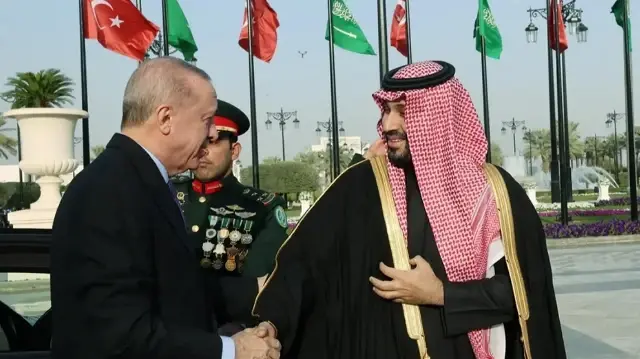
Last week, Saudi Arabia called an urgent meeting of the military chiefs of Turkey and Pakistan under the Mecca Joint Defense Agreement, as Houthi attacks on the kingdom intensified. When the chiefs met in Riyadh on September 25, they discussed intelligence sharing, military coordination and the integration of defense capabilities. The meeting has renewed the question of whether Turkey could be drawn into the war in Yemen.
The region is caught in several wars at once, and the main actors, Iran and Israel included, can disrupt the regional order but appear unable to impose one. For Ankara, involvement in Yemen, or in the wider war with Iran, would likely represent a high-risk, low-reward proposition unless the terms change considerably.
The conflicts now under way in the Middle East combine a civil war, a regional war and the involvement of global powers. Yemen displays all three, while Iran so far displays two. The Houthis have taken Yemen's Red Sea coast and the islands commanding the Bab al-Mandab, a first since the civil war began in 2014. Saudi Arabia is itself a party to the conflict, and Houthi missiles and drones have struck its southern cities and energy facilities. Riyadh would, if it could, eliminate the Houthis. That is an unlimited objective, requiring resources Saudi Arabia cannot muster alone, and no other state has yet shown the will to supply them. This is why Riyadh has shown restraint toward the Houthis, although its patience is wearing thin.
The Houthis' aims, by contrast, appear limited and clear. They seek Saudi recognition of their control, at least over northern Yemen, and do not seem intent on changing the regime in Riyadh. Their strikes on Saudi energy facilities serve as a means of coercion rather than conquest.
Across the water, the civil wars in Sudan and Ethiopia feed the instability along the Red Sea, where several of these states maintain a military presence and have vested interests. The Emiratis once recruited thousands of fighters from Sudan's Rapid Support Forces (RSF) for Yemen, and those forces are no longer there.
The Israeli government seeks to prevent the emergence of any neighbor capable of challenging it in the future. From this perspective, Iran and its proxies are threats to be dismantled. This view runs deep in the Israeli state and is unlikely to change whether or not Netanyahu wins in October.
The United States seeks a return to the status quo ante, with free navigation through the Strait of Hormuz and the Bab al-Mandab. It no longer expects, or seeks, regime change in Iran.
Iran, for its part, seeks assurances for the survival of its regime, backed by ironclad guarantees in any arrangement, including one covering maritime traffic through the Strait of Hormuz.
The Gulf states are prepared to make concessions to reopen the Strait of Hormuz, but they oppose easing pressure on Iran until a deal on the strait is reached.
These differences are difficult to reconcile, and this matters for any settlement. No party can impose an order it prefers, so a settlement will have to emerge from bargaining rather than from victory.
The difficulty of reaching a settlement in these wars is compounded by the fact that neither Iran nor Israel is a regional hegemon, despite appearances. Israel, for instance, has been unable even to change the political order in Gaza, despite the immense destruction it has inflicted on its tiniest neighbor. They appear powerful because they can disrupt the regional order. Yet the capacity to disrupt is not the capacity to lead. Both are largely isolated diplomatically in the Middle East, and association with either carries a cost for other states.
The coming weeks may offer a window for a settlement. Israel votes on October 27, and the United States holds midterm elections on November 3. A fundamental change in Israeli policy toward Iran and the region is unlikely whatever the results. Even so, a door to negotiations with Iran could open after the Israeli elections. After November, whatever the midterm outcome, President Trump is also likely to have greater latitude on Iran, whether for peace or war.
This may make October the moment of greatest Iranian leverage. Before the midterms, when the U.S. president is most politically vulnerable, Tehran could find itself in a stronger position at the negotiating table. At the UN, Iran already put forward a seven-day plan to reopen Hormuz and restart talks, but Trump rejected it and reportedly told aides he expects to resume strikes after the midterms. If that account is accurate, the window may be closing faster than Tehran expected, and a failure to use it could leave Iran facing renewed escalation in November.
Three other powers, Turkey, Egypt and Pakistan, could partly influence developments in the region. All three are hurt by these wars and by the growing instability around them. Yet they can play only a marginal role in ending them, and none currently has much appetite for risk.
Turkey is preoccupied with the fallout of the Syrian war and with President Ahmed al-Sharaa's consolidation of power in Damascus, despite Israeli objections. Egypt, with civil wars in Libya, Sudan and Ethiopia in its neighborhood, has no wish for adventures further afield. Pakistan already has thousands of troops stationed in Saudi Arabia, yet they have played no part in the fighting.
Their economies, however, remain fragile. Finance Minister Mehmet Şimşek estimates that the Iran war has added at least seven percentage points to Turkish inflation, while the foreign trade deficit is widening. Egypt and Pakistan do not fare much better. Generous Saudi offers could therefore prove tempting to President Sisi, President Erdoğan and Prime Minister Shehbaz Sharif.
So far Turkey has offered only technical assistance. Foreign Minister Hakan Fidan said Turkey could meet Saudi military needs, particularly on technical matters, and Ankara is reportedly preparing defensive support against missiles and drones, possibly from October.
In the Iran war, their potential role is limited, since the other Gulf states, Israel and the United States are all already engaged, leaving little for Ankara or Cairo to add. Ankara's part in it has so far been confined to reluctantly joining economic measures against Iran. Recently, Turkish carriers suspended flights to Iran as new U.S. sanctions took effect. The banking regulator revoked the license of Bank Mellat's Istanbul branch. And banks were ordered to flag transactions linked to UN sanctions lists. Ankara also has reasons of its own to go no further. Tehran has not treated Turkey as a hostile party in this war. Entering it on the Saudi side could bring lasting friction with Iran and expose Turkey to reprisals.
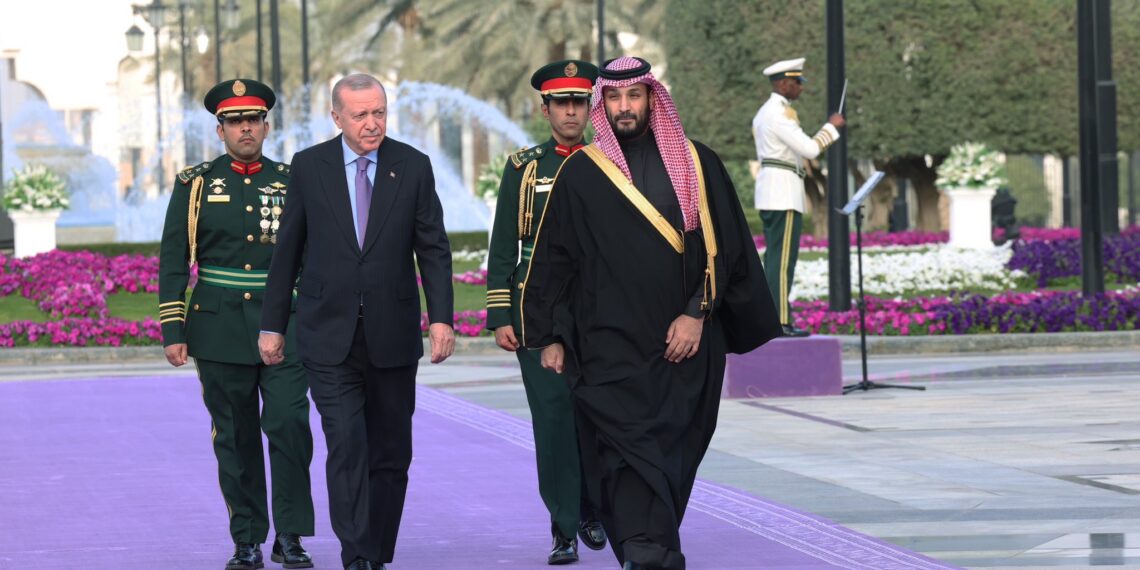
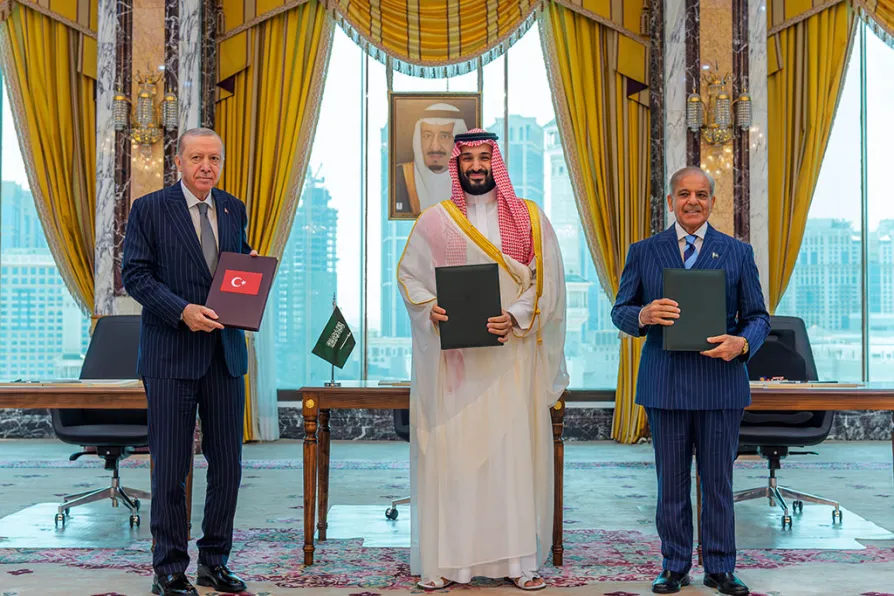
The situation in Yemen is less dire for Turkey. Washington has ruled out a direct role, and the war has effectively been left to the Saudis. That is precisely why the expectation from Turkey and Egypt is growing there, and why the question of whether Turkey would follow Saudi Arabia into Yemen has become a matter of concern. Saudi Crown Prince Mohammed bin Salman met Egyptian President Abdel Fattah el-Sisi in Cairo to discuss what support Egypt could offer. Riyadh has also bound Ankara into the Mecca Joint Defense Agreement with Pakistan, signed on August 7.
For Turkey and Egypt, tilting the balance in Yemen would be possible only by deploying troops on the ground. The terrain is mountainous, and the Houthis field an estimated 350,000 fighters. Neither Ankara nor Cairo seems likely to send an army large enough to make a difference. Cairo knows Yemen from experience. Its intervention of 1962–67, which at its peak involved some 70,000 troops, ended badly. For Turkey, the misadventures of the Ottoman army in Yemen, which fought a costly revolt there from 1904 to 1911, remain a cautionary tale.
The war aims of the belligerents in the Middle East are not easy to reconcile, and the parties are not yet ready to settle. Turkey, meanwhile, has no strategic reason to intervene in Yemen. As long as freedom of navigation is secured, its principal interest lies in the oil trade through the Red Sea, not in who governs Sanaa. Nonetheless, Turkey could still be tempted to get involved by a desire to play a larger role in the Red Sea and the Gulf, and to protect its investments in the Horn of Africa, particularly in Somalia.
The wars in Yemen and Iran carry high risk and offer little reward for Turkey. Yet the calculation could change under specific conditions. Turkey would need either a very large coalition, on the model of the 1991 Gulf War, in which its contribution would be one part of a much larger whole, or a financial reward from the Saudis commensurate with the risk. In either case, Saudi Arabia would also have to commit its own ground troops alongside Turkey's. Ankara cannot be expected to fight a land war in Yemen that Riyadh itself will not fight.
Restraint appears to serve Turkey better than intervention in a war it can do little to shape. Ankara would be well advised to stay out.




.svg.avif)