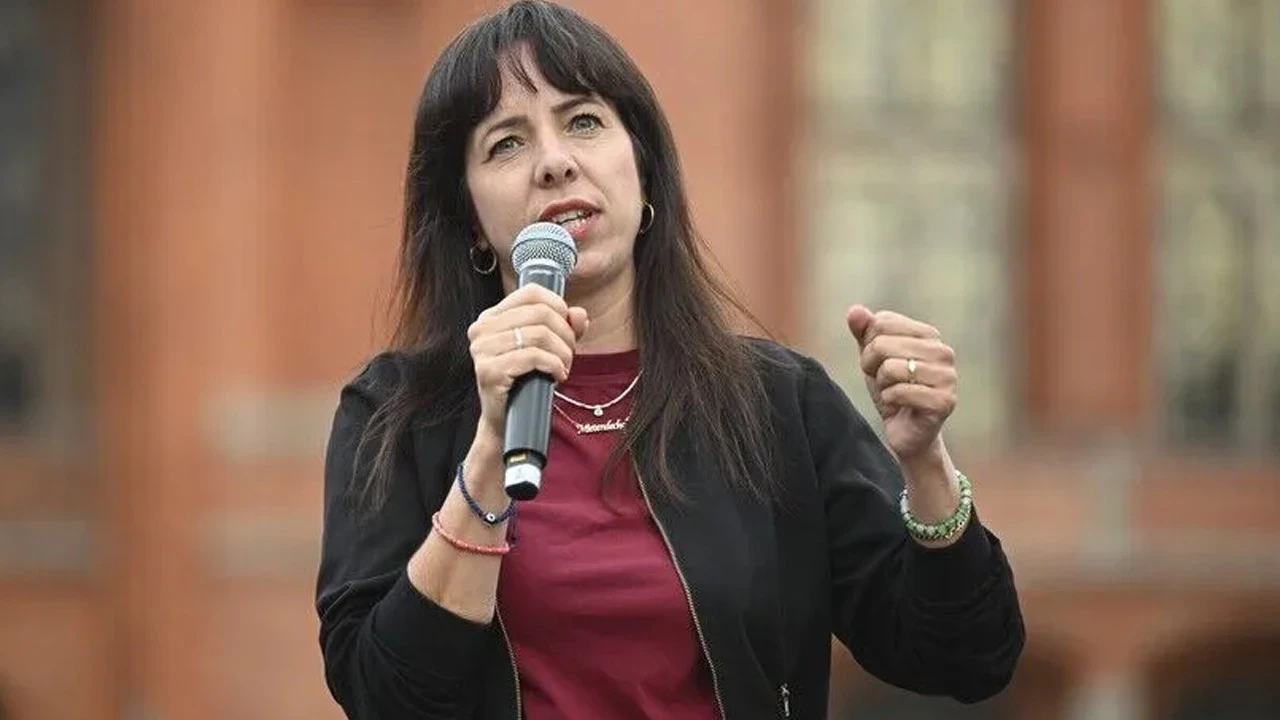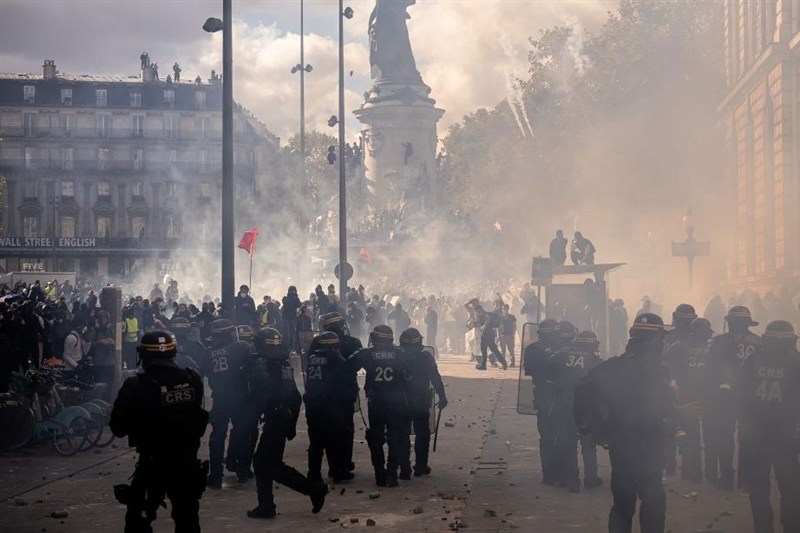
In mid-September, students at Lycée Saint-Exupéry in Créteil, a Paris suburb, protested teacher shortages, overcrowded classrooms and crumbling buildings. Within two weeks, France counted more than 400 school blockades. University students, teachers, nurses and the CGT union then joined, and calls to revive the yellow vests turned an education protest into a broader revolt against living costs and failing public services. On October 17, authorities counted 550,000 marchers nationwide, while unions said 800,000. Most marched peacefully, but looters ransacked shops in Paris and Marseille, and Limoges' historic city hall went up in flames.
Street unrest is not unusual in Paris. France has been here before, and I am not just talking about the events in 1789, 1830, 1848 or the 1960s. More recently, in 2018, the yellow vest movement erupted over a fuel tax increase and grew into a revolt against the cost of living and a Paris-centered elite. Even football can set it off. After Paris Saint-Germain's first Champions League title in May 2025, shops on the Champs-Élysées were looted. A year later, after a second title, police made more than 890 arrests across the country, and 178 police officers and gendarmes were injured.
When demonstrations turn into vandalism and arson, the costs extend far beyond broken windows. Local businesses lose their livelihoods, public buildings that serve entire communities are destroyed, and residents feel unsafe in their own neighborhoods. Money that could have gone to schools, the very thing the students marched for, goes to repairs instead. After October 17, Marseille Mayor Benoît Payan lamented that no one was hearing the students' real demands "because idiots are smashing everything."
However legitimate these grievances are, how they are expressed matters. Peaceful protest is an essential democratic right. It has exposed injustice, challenged abuses of power and forced necessary reforms. Yet there is a fundamental difference between demanding change and destroying the communities in which that change must take place.
If we want to break cycles of anger and violence, we must look beyond the immediate crisis, and education is among the most powerful long-term answers. It is fitting that this crisis began in a classroom. But education must mean more than qualifications and preparing for employment. What is also needed is an education that develops critical thinking, empathy, ethical responsibility and respect for human dignity.
Critical thinking teaches people to examine evidence and recognize when political messages exploit fear or spread misinformation. It prompts the questions that matter most in moments of collective anger: Will this action solve the problem? Who will suffer from it? What happens next month, or in ten years? An action can feel satisfying in the moment while making the underlying problem worse.
Critical thinking alone is not enough. People can understand consequences and still be indifferent to others' suffering. Empathy lets us see people with different backgrounds and beliefs as fellow human beings rather than enemies, without requiring us to agree with them.
Peaceful societies are not societies in which everyone shares the same opinions. They are societies in which disagreement does not automatically become hostility. A student should be able to challenge a teacher's argument respectfully, a citizen should be able to criticize a political leader without fear, and people with different religious, cultural or political beliefs should be able to discuss their differences without questioning one another's right to participate in public life. These habits do not develop overnight. They must be learned and practiced.
Families can teach children to listen before judging. Schools can encourage respectful debate and collaborative problem-solving. Universities can expose students to different perspectives and help them evaluate competing arguments, while community organizations can bring people together through volunteering and shared projects. When people feel that their voices matter and that their future is worth investing in, they have stronger reasons to contribute constructively to the communities around them.
Education must therefore combine intellectual development with emotional maturity and civic responsibility. Scientific progress can transform the material conditions of life, but empathy and ethical judgment help determine how that progress is used. Teaching people to respect others does not mean asking them to tolerate injustice or abandon their convictions. It means showing them that it is possible to defend one's principles without humiliating others, to challenge authority without hatred and to demand justice without inflicting unnecessary suffering.
Education should also teach people how to live together. Such an education cannot come from textbooks alone. Young people should not merely be told to behave responsibly. They should be given a real say in decisions that affect them. The French students who asked for a stronger voice in their own schools were asking for exactly that. The government's promise to strengthen high school councils, with reasoned answers and implementation deadlines, will show whether it was listening.
It is tempting to believe that solving social unrest depends entirely on political leaders or major institutional reforms. These are undeniably important, but peace is also shaped by ordinary decisions made every day. It is built when someone listens to a person they disagree with instead of responding with contempt, when a teacher helps a struggling student, when neighbors support a vulnerable family, or when young people volunteer to improve their local community. Such actions may appear insignificant compared with political demonstrations or national crises, yet they strengthen the trust and solidarity that enable societies to withstand difficult periods.
Citizens also have a responsibility to look beyond what they expect from society and consider what they can contribute to it. This does not mean accepting injustice, remaining silent or relieving governments of their obligations. It means recognizing that meaningful change requires both accountable institutions and active citizens. Education, dialogue and voluntary service cannot replace necessary political and economic reforms, but they can create the social foundations that make those reforms more effective and sustainable.
Political and community leaders have a responsibility of their own: to lead through integrity, encourage cooperation rather than hatred, and place the public interest above personal ambition. That test will only grow harder as France heads toward its April 2027 presidential election. The far right is already using the protests as campaign material. Marine Le Pen has blamed the looting on the left and on "decades of immigration," without offering firm evidence that immigrants led the rioting.
Social unrest rarely develops in isolation. Social media allows images, ideas and emotions to travel across national borders almost instantly. When people in different countries experience similar economic pressures or feel excluded from political decision-making, events elsewhere can inspire them to voice their own frustrations. Within weeks of the Créteil walkout, students and workers took to the streets in Belgium, Italy, Spain, Portugal and Albania, each over their own mix of education, housing, living costs or corruption. Yet nowhere has the unrest matched France's in scale or violence, because each country has its own local conditions.
The unrest thus raises a question that extends far beyond France: how can societies respond to public frustration without letting it descend into violence and deeper division? Across Europe, many people face rising living costs, housing shortages and strained public services, and many feel that political institutions no longer listen. These frustrations should not be dismissed as a mere passing phase of youthful rebellion.
France and the wider European community can draw several lessons from the recent unrest. First, legitimate grievances must be addressed before distrust becomes entrenched. Second, democratic rights must be protected even during periods of tension, because criticism is one of the means through which democracy corrects its own failures. Third, violence must never be romanticized as a shortcut to justice. Fourth, governments must combine fair law enforcement with genuine social reform. Finally, education must be treated as a long-term investment in social peace. None of these measures offers an instant solution, and social trust takes time to build. But the absence of an easy solution is no reason to abandon the search for a better one.
The future of France, like that of any society, will depend not only on how well authorities respond to a crisis, but also on whether citizens and institutions can learn from it. The real measure of progress is not how effectively a society suppresses its conflicts, but how wisely it resolves them.