When the United States sent a massive naval force into the Caribbean this year, alarms immediately went off across Latin America. The presence of an aircraft carrier and destroyers so close to Venezuela fueled speculation that a military intervention was finally on the table. President Donald Trump added to that anxiety when he told POLITICO that Nicolás Maduro’s “days are numbered” and refused to rule out a ground invasion.
But behind the tough talk, a different and more calculated strategy is emerging. Pentagon officials have acknowledged that a major military operation in Venezuela would require months of visible buildup. There is little appetite in Congress or among Trump’s MAGA base for a new foreign war. And public polling is overwhelmingly against any boots on the ground. The reality is that the White House understands a ground invasion is unlikely to succeed politically or, for now, militarily.
This is why the naval deployment looks less like a prelude to war and more like high-stakes gunboat diplomacy. The ships are there to raise the pressure on Maduro, not necessarily to fire the first shots. The current negotiations and phone diplomacy have essentially boiled down to one key question: where Maduro will end up when he finally leaves power.
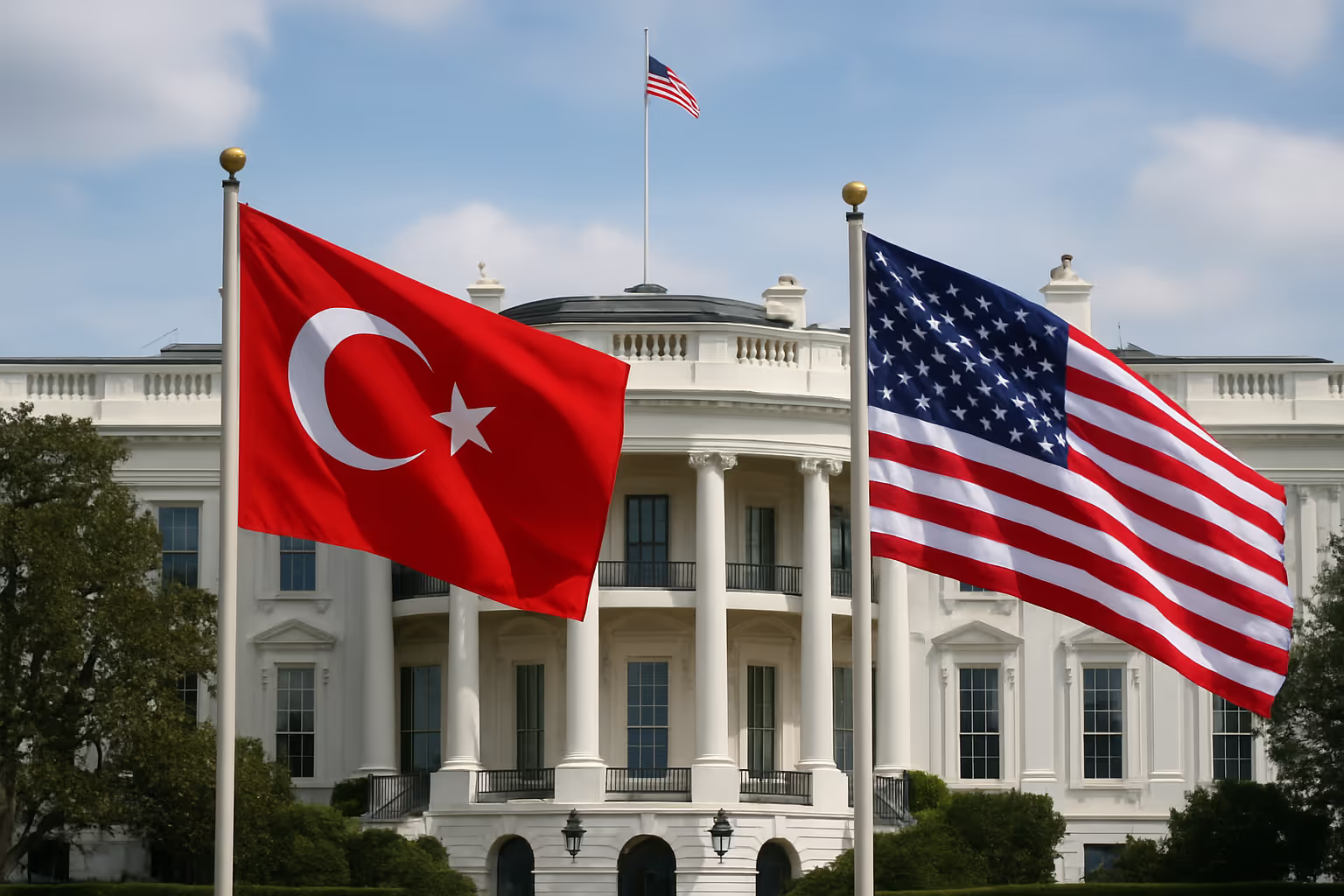
Turkey has emerged as the most realistic destination for Maduro if he is pushed to leave power. As noted in recent reporting by The Washington Post, U.S. officials increasingly view Ankara as the most viable refuge for the Venezuelan leader, especially as American naval forces build up pressure in the Caribbean. That idea is now being echoed publicly in Washington. On Saturday, Senator Lindsey Graham praised President Trump’s hard line on Venezuela, labeled Maduro’s regime a “narcoterrorist state,” and added a pointed suggestion: “I hear Türkiye and Iran are lovely this time of year…” And inside Trump’s circle, the goal is increasingly clear. Steve Bannon openly stated that the mission is to convince Maduro to “go to Turkey, leave the country.”
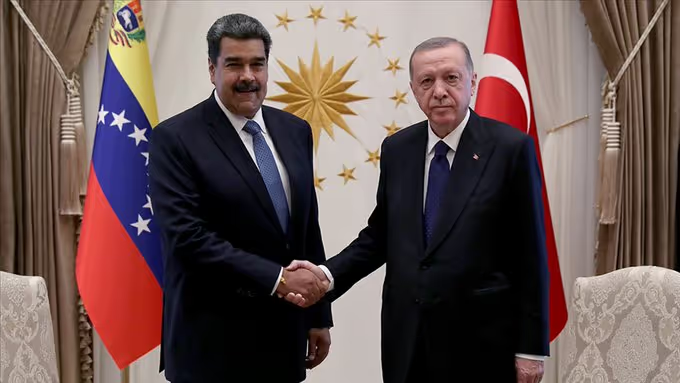
That is not a surprise to those following the deepening ties between Caracas and Ankara in recent years. Turkey became one of the most important commercial partners for Venezuela after sanctions cut off access to the US financial system. Gold shipments from the Venezuelan Central Bank flowed to Turkish refineries. Turkish companies supplied food packages for the regime’s CLAP program. Erdoğan personally embraced Maduro when much of the democratic world condemned his authoritarian turn. Their relationship is more than diplomatic. Maduro visits Turkey more often than any other country. He praises Turkish culture. He even bonded with the public through his love for Turkish soap operas.
There are also more practical reasons. US prosecutors have charged Maduro with drug-trafficking. Human rights organizations continue to pursue accountability for abuses committed under his watch. Venezuela’s opposition has promised no revenge if he steps aside, but Maduro would have little reason to trust that pledge once he is out of power and stripped of his security apparatus. Turkey, unlike some other possible destinations, is not bound by the International Criminal Court. Erdoğan has already hosted leaders wanted by international courts before, brushing aside legal consequences. For Maduro, Turkey offers legal protection, personal comfort and access to whatever wealth he has managed to move out of Venezuela.
For President Erdoğan, the benefits are also significant. In a phone call on Saturday, Erdoğan urged Maduro to keep communication channels open with Washington. That was not a coincidence. Turkey is presenting itself as the only actor trusted by both sides, with Erdoğan positioning as the broker in one of the Western Hemisphere’s most destabilizing crises. With this opportunity, at home Erdogan could present himself to Turkey’s domestic audience as a global leader once again. Pro-government media would frame Ankara as defending a foreign ally against “imperialist aggression.” And with Trump, the political value of facilitating Maduro’s exit could translate into renewed favor at the White House.
The U.S. naval buildup is not about war; it is a negotiation tactic. The aim is to convince Maduro that leaving is safer than staying. The goal is to avoid a chaotic collapse or guerrilla war, while removing a geopolitical problem without sending U.S. troops. Trump can claim victory. Erdoğan can claim influence. Maduro can live in comfort, far from the justice Venezuelans demand. The key question now is not whether Maduro is pushed out but what comes next after he boards a flight to Turkey.
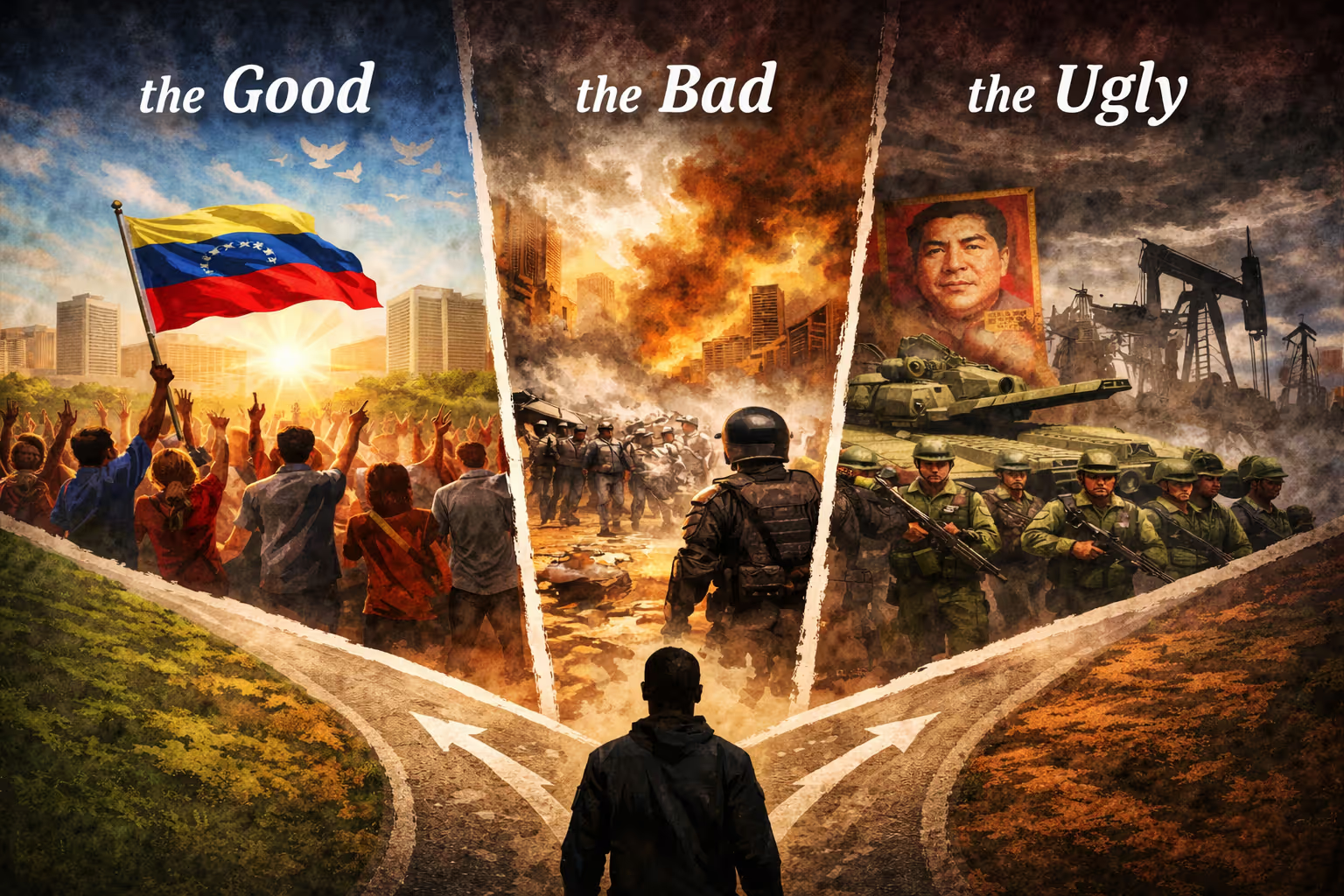
Removing Maduro is only the first step. Venezuela will not wake up healed the moment Maduro steps aside. The first phase after his departure will undoubtedly be messy. Politics will be tense, expectations will be high, and justice will never feel complete for everyone who has suffered. But that does not mean the country should remain trapped in the current nightmare. A return to democracy after Maduro even with setbacks and imperfections, gives Venezuelans a chance to rebuild their institutions, their dignity, and their future.




.svg.avif)