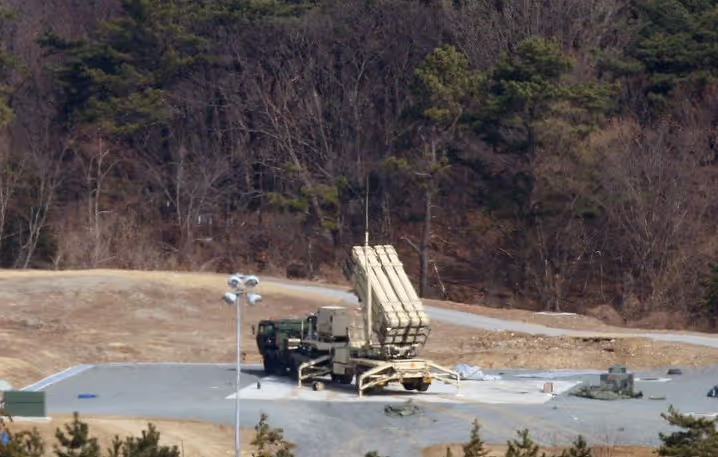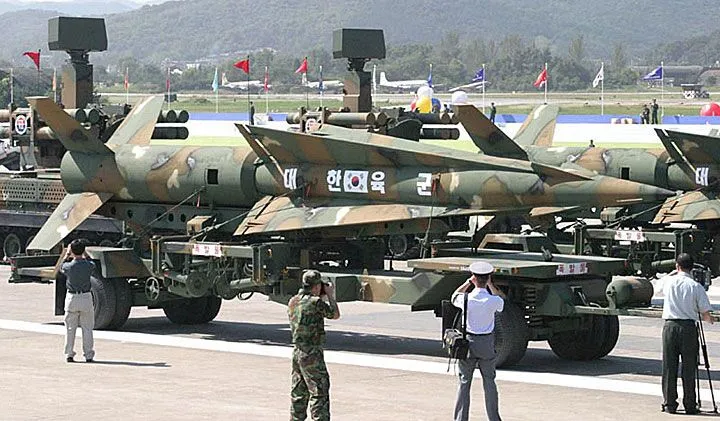
South Korea is investing billions of dollars in sophisticated missile defense systems against North Korea’s increasingly diverse weapons categories. Nonetheless, North Korea can exploit a comparatively less explicit vulnerability: low-cost drones might disrupt infrastructure that supports South Korea’s advanced defense mechanisms without neutralizing the interceptors themselves. As Pyongyang potentially benefits from defense cooperation with Moscow and develops mobile ballistic missiles and unmanned aircraft capabilities, South Korea should prepare for combined attacks involving weapons of vastly different costs.
Instead of relying on high-end missiles, North Korea could operate drones against surveillance, communications, and logistical infrastructure in order to penetrate the Korea Air and Missile Defense (KAMD) system. These operations could weaken KAMD before or during North Korea’s missile attack. The central question, therefore, is not whether South Korea could intercept sophisticated missiles but whether the defenses can remain operational under protracted pressure.
A Technological Race with an Overlooked Vulnerability
South Korea’s modernization of KAMD has focused on enhancing interception capacity. While M-SAM Block-II and Patriot PAC-3 offer low-tier defense, L-SAM—whose development was completed in 2024—will introduce additional opportunities for upper-tier interception. M-SAM Block-III, which is expected to be developed by 2030, is planned to enhance both interception altitude and engagement capacity, while L-SAM II would further expand higher-altitude coverage.
Although these programs demonstrate impressive technological advancement, they cannot ensure the survivability of a broad defense network. KAMD is heavily dependent on radar, command-and-control facilities, communications, and logistical support, and these elements themselves can turn into targets. The effectiveness of KAMD, thus, should be measured through both interception ratios and the resilience of these supporting functions.
North Korea’s drone infiltration incident in December 2022 exposed South Korea’s vulnerability in responding to small UAVs. Meanwhile, the Russo-Ukrainian War illustrates how drones could complement missiles when it comes to attacks on military facilities. Although North Korea has not validated sustained and large-scale combined drone-missile operations, the expanding technological options necessitate preparation for such events.
Two Different Problems Need Two Different Solutions
South Korea should distinguish between protecting KAMD-related facilities and integrating KAMD with Counter-Unmanned Aircraft Systems (C-UAS). While the former requires local defense systems around radar and missile defense interceptor batteries, the latter concerns coordination between sensors and defensive weapons against simultaneous threats. Addressing one requirement does not necessarily resolve other requirements.
South Korea has introduced laser-based C-UAS weapons—Cheongwang Block-I was fielded in 2024, and its mobile variant, Cheongwang Block-II, is expected to be fielded soon—and is currently developing additional electronic warfare capabilities. Nonetheless, acquiring these weapons alone cannot prove whether KAMD facilities are sufficiently safeguarded or whether existing networks could be effectively coordinated. Thus, before additional organizational reforms are undertaken, specific gaps should be identified through classified evaluations.
Priorities for Seoul
Firstly, KAMD’s supporting infrastructure should be safeguarded. By late 2027, the Joint Chiefs of Staff, together with the ROK Air Force, should assess the overall vulnerability of missile defense facilities to drone attacks. Afterwards, the Defense Acquisition Program Administration (DAPA) should prioritize deploying multilayered C-UAS packages—combining detection devices, electronic warfare, short-range interceptors, and directed-energy systems—against autonomous drones that could resist existing electronic jamming.
Secondly, defense operations should be integrated without duplicating command structures. The Ministry of National Defense (MND) should designate the Joint Chiefs of Staff as the operational requirements authority for KAMD-C-UAS integration and let DAPA coordinate acquisition. By mid-2027, a working group should discern incompatible data interfaces and rules of engagement, and demonstrate interoperability of new systems by 2028.
Thirdly, interception performance as well as defensive sustainability should be measured. Starting in 2027, South Korea should conduct annual exercises involving simulated drone, ballistic missile, and cruise missile attacks against selected facilities. The evaluation should calculate surveillance continuity, availability of command-and-control functions, interceptor consumption, recovery time, and continuous engagement capacity.
Fourthly, wartime production and replenishment capabilities need to be reinforced. For missile interceptors and relatively inexpensive C-UAS weapons, the MND and DAPA should set classified stockpile requirements. By 2028, they should sign agreements with domestic manufacturers in preparation for production surges, and identify vulnerable component supply chains. Affordable C-UAS would be helpful in preserving high-end weapons like interceptor missiles for threats that require them.
Fifthly, South Korea should develop cost-effective defenses to prevent large-scale attacks combining cheap drones and missiles from overwhelming its air defense network. Ukraine, which faces Russian drone and missile barrages almost daily, has developed countermeasures that neutralize attack drones at a fraction of a missile’s cost. South Korea could draw on Ukraine’s battle-proven experience through cooperation with Kyiv. Such cooperation, however, should be calibrated carefully, as Seoul has long sought to avoid further straining its relations with Moscow.
What Washington and Tokyo Should Contribute
South Korea should seriously consider the possibility of the United States encountering simultaneous contingencies across the Indo-Pacific region—as depicted in the Atlantic Council report. American ISR, missile defense, and logistical resources might be needed in multiple theaters. Therefore, Seoul should strengthen its defensive self-sufficiency while maintaining interoperability with US forces.
Meanwhile, the United States should prioritize warning and tracking interoperability, exercises against complex threats, and replenishment of wartime interceptor missiles. The Korea-US Integrated Defense Dialogue should supervise bilateral plans for implementation by 2027. Joint exercises should test whether allied defense networks could continuously operate irrespective of disruptions.
Japan can contribute by cooperating in the fields of maritime and airborne surveillance, regional warning coverage, and defense industrial cooperation. Nonetheless, Japanese assets would likely be employed for homeland defense if a contingency breaks out in the Taiwan Strait. Thus, trilateral cooperation should underscore resilient intelligence sharing rather than dependence on specific Japanese platforms.
Grounded in the existing real-time missile alert system and Freedom Edge exercises, Washington, Japan, and Seoul should establish a working group to assess intelligence sharing on selected cruise missile and drone alerts. By the 2028 Freedom Edge exercise, the three countries should test combined-threat scenarios where one participant’s surveillance function becomes unavailable. Cooperation on crucial C-UAS technology components could further enhance wartime sustainability without an integrated trilateral command system.
Deterrence Beyond Interception Systems
Missile defense contributes to deterrence by denial by reducing an adversary’s confidence that an attack would be successful. In the case of South Korea, this requires preserving military infrastructure and retaliatory capacity despite repeated attacks, instead of merely maximizing individual weapons’ interception ratios. A defense network that retains operational readiness under ceaseless pressure could contribute more to overall deterrence in comparison to a defense network that rapidly loses its effectiveness despite impressive performance in the initial phase of conflict.
The next challenge for South Korea’s missile defense is to prevent North Korea’s inexpensive weapons from weakening critical infrastructure that supports South Korea’s expensive defense system. To address these issues, KAMD and C-UAS should be integrated through coordinated acquisition, operational testing, and sustainable production capability. Cooperation with the United States and Japan would strengthen these efforts and should proceed in a way that enables South Korea’s self-reliant defense, especially when finite allied resources are confronted with competing demands elsewhere.