The potential deployment of a U.S. Army Multi-Domain Task Force (MDTF) element to South Korea presents a strategic paradox. Enhanced US surveillance and targeting capabilities could strengthen the overall deterrence against Chinese and North Korean provocations, but they may expose Seoul to China’s retaliation and create vulnerabilities in its defense against North Korea.
During the October 13 discussion at the Center for Strategic and International Studies (CSIS), United States Forces Korea (USFK) commander Xavier Brunson emphasized the multilayered detection capabilities that go beyond the Korean Peninsula. His remarks indicate that Washington considers South Korea part of a broader regional military architecture, and not simply a frontline against North Korea. The central issue is whether the deployment of an MDTF could reinforce deterrence across two potential theaters without weakening South Korea’s security.
Why the Type of MDTF Deployment Matters
In order to respond to an adversary’s Anti-Access/Area-Denial (A2/AD) network, an MDTF integrates intelligence, electronic warfare, and cyber capacity with long-range precision strike capabilities. An MDTF’s Multi-Domain Effects Battalion (MDEB) combines information collection from diverse sensors to support operations across various domains.
According to press reports cited by the Congressional Research Service, the US Army may move hundreds of troops associated with the 2nd MDTF from Germany to South Korea. The reported move concerns the MDEB element and not necessarily the entire unit. As of mid-October, the US Department of War had not confirmed the relocation.
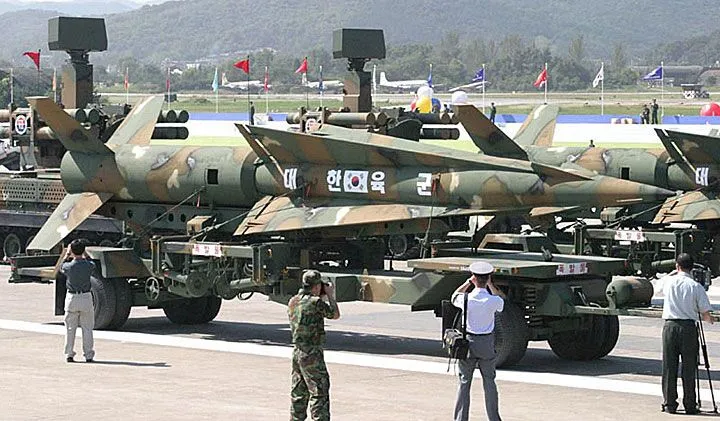
The deployment of an MDEB would primarily strengthen intelligence gathering, intelligence fusion, and non-kinetic operational capabilities. Meanwhile, the stationing of a long-range strike system could have somewhat different strategic implications. For example, the US Army’s Dark Eagle hypersonic missile has a publicly reported range of approximately 2,775 kilometers. If deployed in South Korea, a substantial portion of mainland China would be within its range, likely altering China’s perception of USFK.
Nonetheless, an MDTF’s detection capability alone—even without the presence of these missiles for attack—could complicate the problem. Collecting general intelligence on the movement of Chinese forces is different from providing time-sensitive target information that makes US strikes possible. Regardless of whether a missile is launched from South Korean territory or not, China may interpret the latter as participation in hostile activities.
A Dual-Contingency Advantage That Could Become a Liability
Consider a Chinese naval blockade of Taiwan accompanied by North Korea’s missile provocations against South Korea. Under those conditions, American surveillance, missile defense, PGMs, and logistical support would confront competing demands. MDTF elements based in South Korea could enhance monitoring of North Korean military activities while contributing to broader surveillance of Chinese forces. Simultaneously, US military capacity operating in Japan could monitor Chinese naval and air activities in and around Taiwan.
Such integration could complicate an adversary’s operational plan. Neither Beijing nor Pyongyang could assume with certainty that a crisis in one theater would necessarily neutralize US surveillance capabilities in the other theater.
However, the same architecture could cause conflicting demands for intelligence analysis, communications networks, and detection capabilities. If these resources are diverted to Taiwan, availability for the Korean Peninsula could be diminished.
More importantly, MDTF assets deployed on the Korean Peninsula that support operations against China may turn into targets of China’s cyberattacks, electronic warfare, or potentially military strikes. If South Korean defense mechanisms heavily depend on intelligence provided by an MDTF, America’s regional operations and South Korea’s ability to monitor North Korean threats could concurrently be reduced if these assets are disrupted. In that sense, an MDTF that is intended to strengthen deterrence against China could create a vulnerability exploitable by North Korea.
Different Priorities for Washington, Tokyo, and Seoul
The United States pursues operational flexibility across the Indo-Pacific. Meanwhile, Japan is increasingly prioritizing Chinese military activities near Taiwan and in the southwestern part of the Japanese archipelago. Japan also hosts seven United Nations Command (UNC) rear bases that support potential reinforcement operations for future contingencies on the Korean Peninsula.
South Korea’s immediate priority remains deterring North Korea. While intelligence integration at the regional level could improve South Korea’s defense, supporting US operations against China could expose South Korea to retaliation without delivering proportionate benefits for peninsula defense.
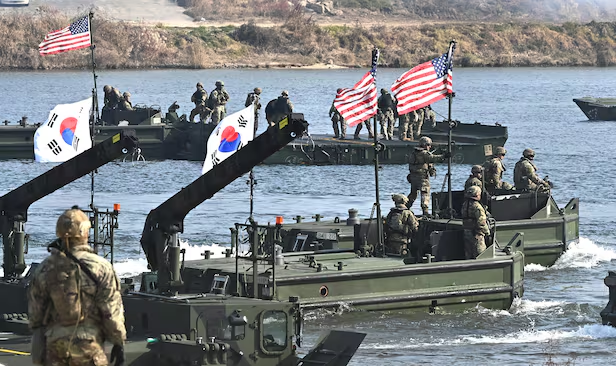
In a simultaneous dual-contingency scenario, the United States would likely concentrate on Chinese forces and Japan on its southwestern islands, while South Korea would require uninterrupted surveillance of North Korea’s mobile missile launchers. Seoul’s priority is not hypothetical: in tabletop exercises simulating a war with China that spills over to the Korean Peninsula, South Korean players wanted US forces in Korea to stay focused on North Korea.
To be sure, these different priorities are not fundamentally incompatible. Nevertheless, if the same US intelligence and communications resources are needed in two concurrent contingencies, coordinating divergent priorities could become difficult.
Managing the Risk Before Deployment
A serious political issue could occur in South Korea even in the absence of an official decision on Seoul’s participation in the Taiwan conflict. China may resort to economic coercion, cyberattacks, or threats against facilities that assist US operations. A bilateral agreement does not automatically confer on Seoul veto power over US military operations, and MDTF elements deployed to South Korea would not necessarily fall under the operational control of the ROK-U.S. Combined Forces Command (CFC). If a clearly established process is absent, divergent views on MDTF operations may undermine alliance coordination during a crisis.
The United States, Japan, and South Korea should address this issue prior to MDTF deployment on the Korean Peninsula. First, the United States and South Korea should distinguish routine surveillance, intelligence activities for peninsula defense, and targeting support for operations against China. Each category should have predefined notification and consultation procedures; the host nation’s consent should also be addressed where legally applicable. These measures should clarify political responsibilities without confusing agreement with operational command.
Second, a simultaneous-contingency resource allocation protocol—which identifies the detection, analysis, and communications resources required for peninsula defense—should be established. During military exercises, it should be verified whether these requirements are fulfilled even when American assets are diverted to Taiwan.
Third, the United States should consider geographically distributing MDTF capabilities. For example, selected surveillance elements could be operated in South Korea while long-range strike capabilities could be fielded in other parts of the Indo-Pacific. Although such a measure would not eliminate the risk of escalation involving targeting support, it may reduce the political consequences of placing offensive weapons on South Korean territory.
Fourth, South Korea should maintain independent surveillance and command capacity. Its reconnaissance satellites, aerial sensors, and government-controlled networks should be able to function normally even if US resources are either disrupted or redeployed for other missions. For that reason, Seoul should seriously invest more in ISR capabilities as the wartime operational control (OPCON) transition proceeds further.
Last but not least, trilateral exercises should simulate scenarios where China interferes with the MDTF network and North Korea’s missile attacks happen at the same time. The key goal should be to determine whether operational awareness is maintained in both theaters when communications are considerably degraded and conflicting demands emerge.
MDTF deployment could reinforce regional deterrence. Yet the enlargement of technological integration itself does not automatically translate into enhanced security. Hence, the success of MDTF deployment should be evaluated not by the sophistication of its sensors or the range of its weapons, but by whether it strengthens deterrence against adversaries.