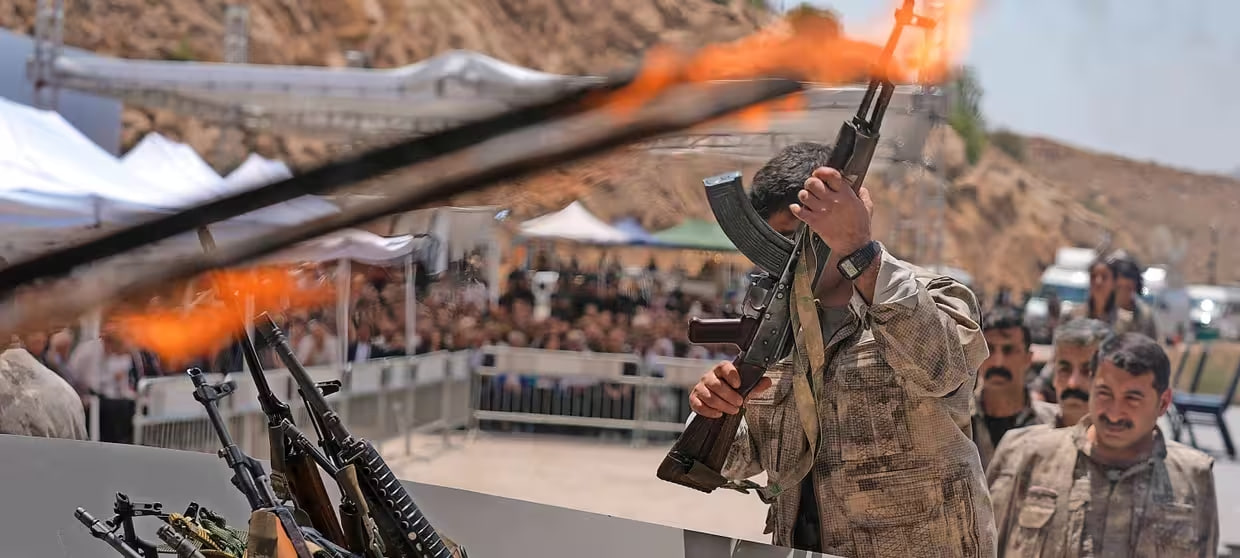
Turkey stands closer to ending its four-decade war with the Kurdistan Workers' Party (PKK). A draft framework law, the product of more than two years of negotiations with the imprisoned PKK leader Abdullah Öcalan, reached parliament this week, and a plenary vote is expected soon. An end to the armed conflict would benefit Turkey and the wider region.
The AKP government and its nationalist allies appear to believe they can end the conflict with minimal concessions, while much of the PKK seems persuaded that it can no longer secure gains against the Turkish state by force. A settlement therefore appears plausible. The way the government has drafted the law and managed the process, however, carries several warning signs that temper such optimism.
1. Erdoğan did not make the announcement himself
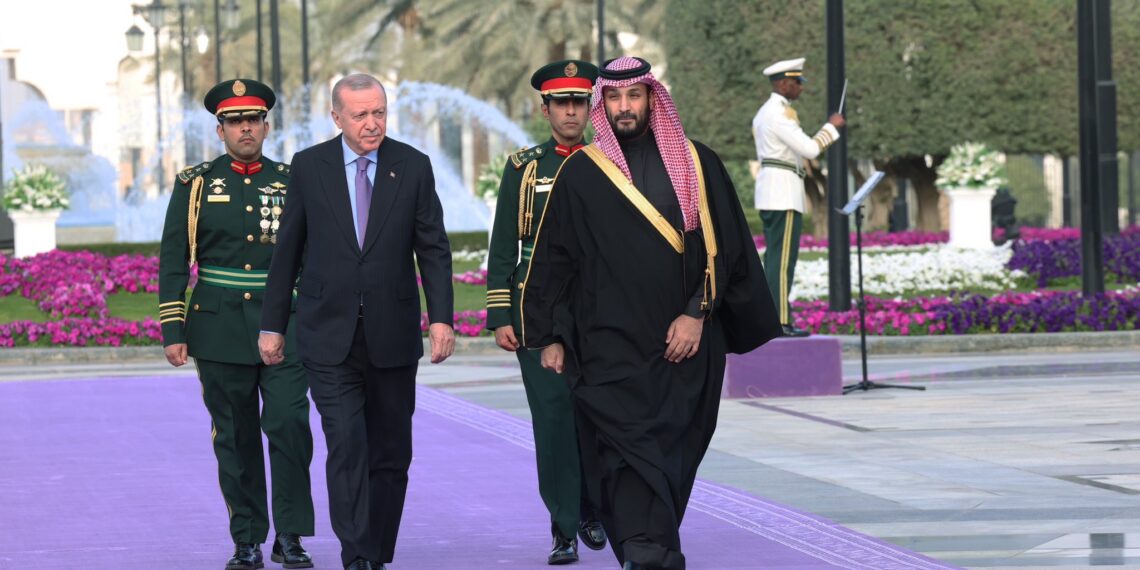
Erdoğan has publicly championed the reconciliation process, making a "terror-free Turkey" one of his signature policies. He did not, however, personally announce the law when it reached parliament, and he stayed largely out of the media at what is a decisive moment for the process. He only shared a brief endorsement on his social media account, extending his good wishes and thanking his allies in the process.
Erdoğan seldom relinquishes credit for a popular measure. Announcements of benefits tend to come from him, whether a modest pension increase or an extended public holiday, while anything that carries a risk of blame, such as a tax hike, is left to his ministers and lieutenants. None of this is unusual for a seasoned politician.
His low profile at this moment is therefore telling. It suggests he may be hedging against a public backlash, a breakdown in the process, or some other adverse turn. That caution is consistent with precedent. This is the second attempt by an AKP government and the PKK at a negotiated settlement. The first one collapsed in 2015 when Erdoğan disowned the Dolmabahçe agreement that had underpinned the process. This gave way to fighting in the southeast that devastated several towns and displaced an estimated 335,000 to 500,000 people, most of them Kurds.
2. The process lacks transparency
Turkish intelligence has run the latest negotiations with the PKK in near-total secrecy. Neither the public nor parliament knows how the talks were conducted. The file rests with the intelligence service, and is likely to stay there. The draft framework law was not discussed with legislators beforehand. Even AKP deputies were asked to sign the bill before seeing its final text, and they complied.
Nothing has emerged, either, about which outside actors, if any, mediated. Nor is it clear what informal understandings may sit alongside the formal text for the next stages. This kind of opacity, together with the absence of any independent monitoring mechanism, was among the reasons the previous process with the PKK failed.
3. The law contains an immunity clause
Article 10 of the draft framework law provides that individuals carrying out duties under the law incur no legal, administrative, or criminal responsibility for those acts. A statute that announces in advance that its own implementation carries no liability is unusual. Officials and citizens are normally accountable under the law; a clause that lifts that accountability in advance may reflect concern within the security bureaucracy about potential legal exposure should the process later unravel. Even so, should the process collapse as the first one did, the clause is unlikely to shield them in a changed political climate.
Notably, the most prominent immunity clauses in modern Turkish law were written to protect the leaders of the 1980 coup, through Provisional Article 15 of the 1982 constitution, and to shield the pro-government civilians and officials who acted around the July 2016 coup attempt. In both cases, impunity followed a moment of acute insecurity for the state.
4. The law addresses symptoms, not causes
The Kurdish question predates the Republic and has shaped Turkish politics for roughly a century, punctuated by revolts in the 1920s and 1930s, the most devastating of which was the Sheikh Said rebellion of 1925. The PKK's insurgency, waged since 1984, has killed tens of thousands across Turkey, Syria, Iraq, and Iran.
The Kurdish issue has several drivers, such as language and cultural rights, demands for greater local governance, discrimination, and economic underdevelopment. The draft law engages none of these underlying issues. Nothing suggests they are even under consideration. The bill functions mainly as an amnesty-and-return mechanism, defining who will be released, who may return, and on what terms.
In this regard, pro-government media report roughly 2,800 PKK members in northern Iraq, a further 1,000 to 1,500 Turkish citizens in Syria to be cleared to return, and some 3,900 imprisoned PKK members awaiting release. Together these come to roughly 8,000 PKK members, and some reports indicate that a further 1,500 PKK prisoners have already been released.
A process organized only around amnesty, rather than the grievances beneath it, leaves the conditions that produced the conflict intact and may pave the way for its eventual return.
5. The PKK's transformation into the PJAK
Even if the domestic settlement succeeds, the regional environment may still generate security challenges. On paper, the PKK has dissolved itself. However, its Iranian affiliate, the Free Life Party of Kurdistan (PJAK), has not, and appears to be gaining strength.
During the recent U.S.-Israeli war on Iran, planners reportedly weighed a ground component in which Kurdish factions led by the PJAK would engage Iranian forces and seize territory. Reuters reported that Israel struck parts of western Iran to support Iranian Kurdish militias seeking to capture border towns such as Oshnavieh and Piranshahr.
The plan appears shelved for now, though Israel has continued to promote it. Foreign Minister Hakan Fidan has stated that Secretary of State Marco Rubio assured him Washington has no intention of arming Iranian Kurds. Turkey, for its part, is closely monitoring the PJAK's activity.
Nonetheless, some PKK fighters have already moved to the PJAK rather than disarm. Because the PJAK shares the PKK's ideology, cadres, and infrastructure, a stronger PJAK would pose a latent risk to Turkey. Should conditions along the Iranian frontier shift, a force built on the same foundations could eventually turn against Ankara.
These signals point in the same direction. The government has designed a process it can control, insulated it from parliamentary and public scrutiny, written advance protection for the officials who run it, and confined its substance largely to disarmament, return, and amnesty, while leaving the political core of the Kurdish question untouched. The regional dimension, embodied in the PJAK, adds a variable that Ankara does not fully command.
The process is also built to remain reversible. Unlike the first opening, it involves no visible effort to normalize the PKK or rehabilitate its political standing, leaving Erdoğan free to disengage. The fragility of the SDF enclave in northeastern Syria gives Ankara further leverage over the peace process.
None of this makes failure inevitable, and an end to the armed conflict would remain a significant gain for Turkey and the region. A settlement engineered for reversibility and shielded from accountability is nonetheless a fragile one. The accumulation of warning signs, in the text of the law and in the manner of its passage, is reason enough to temper the current optimism, and to watch closely how its next stages unfold.




.svg.avif)