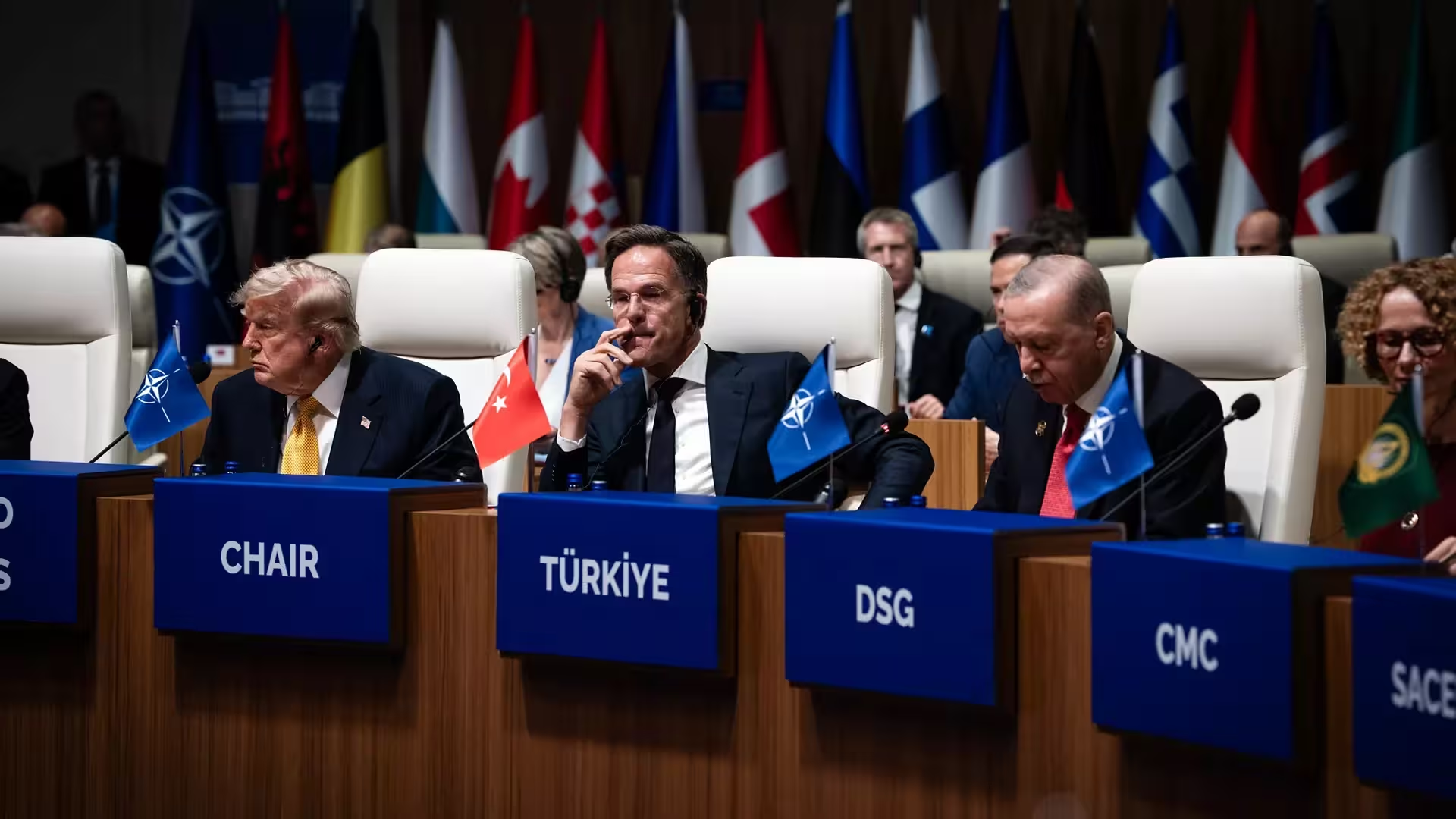
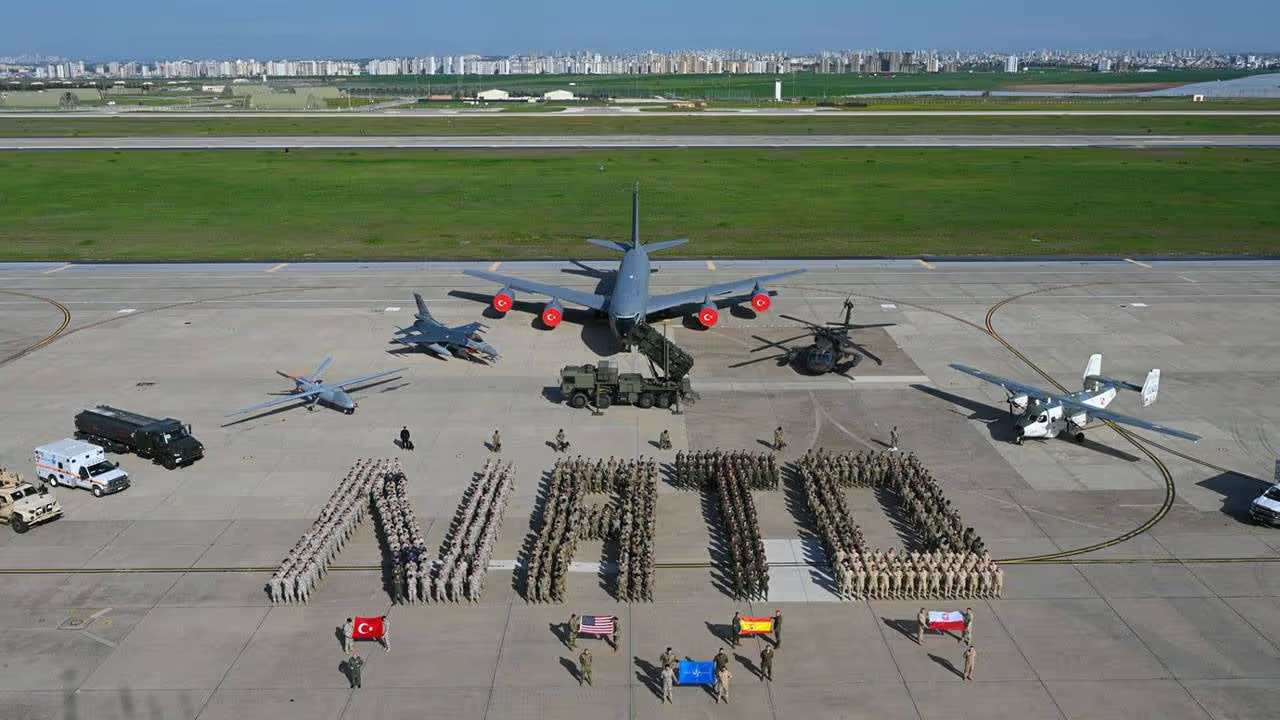
The NATO summit held in Ankara on July 7 and 8 produced few surprises. By the standards of the alliance in its current condition, a summit that ends without a scandal counts as a success, and Ankara delivered one. Participants across delegations described a flawlessly organized event in which every need had been anticipated, a sentiment the summit declaration itself echoed in recording the allies' appreciation for Turkey's hospitality. The summit also marked a high point in Turkish-American relations, one built less on institutions than on the personal chemistry between Donald Trump and Recep Tayyip Erdoğan. That harmony delivered tangible gains for Ankara. It also carries costs that were far less visible amid the glamorous ceremony.
Under the Biden administration, Turkish-American ties stagnated into a narrow, transactional channel, with little personal rapport between the leaders. Trump reversed the dynamic almost immediately. Part of the explanation lies in Trump's affinity for strongmen, including Turkey's Erdoğan. But the larger part lies in Erdoğan's sustained investment in the relationship. He has learned how Trump operates and supplies what Trump values most: flattery, spectacle, and deliverables that can be presented as personal victories. Standing beside Erdoğan in Ankara, Trump once again recounted one of his favorite examples of personal diplomacy: "I called the President and he released him [Pastor Brunson] immediately, something that the evangelical community will never forget."
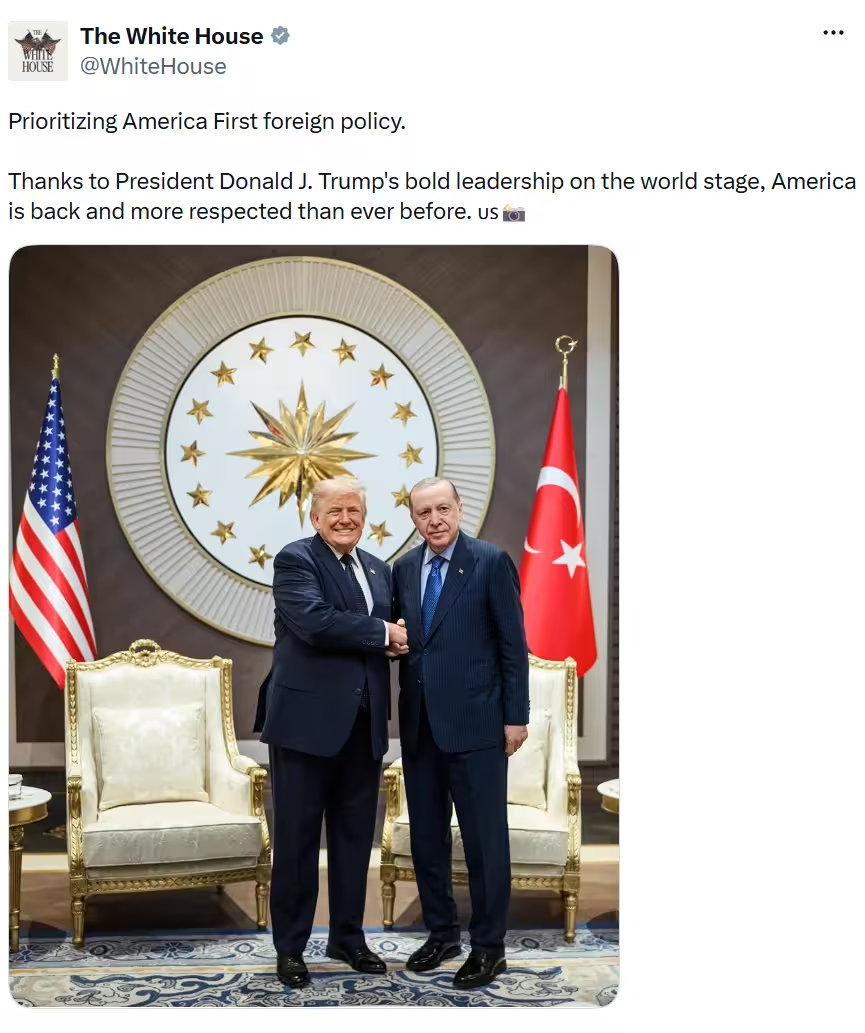
Erdoğan did not merely flatter Trump; he also manufactured the material with which Trump flatters himself before his domestic audience. Trump, who had stated weeks earlier that he was attending the summit because of Erdoğan, was received at the airport by the Turkish president in person, complete with an honor guard, a cavalry escort, and cannon fire. The Ankara summit served Trump's purposes as much as Erdoğan's: the White House repurposed the trip as proof that under Trump's leadership America is once again respected on the world stage, illustrating the claim with a photograph of the two presidents shaking hands beneath the presidential seal at Erdoğan's palace.
The summit's staging was designed to cultivate exactly this audience. For months, Ankara underwent an intensive beautification campaign, with dilapidated facades covered, streets repaved, and unsightly districts screened from view. Trump, in return, praised Erdoğan as well as the capital's airport and roads.
For the Turkish government, the returns were immediate. Trump announced that the CAATSA sanctions imposed on Turkey would be lifted and signaled openness to readmitting Turkey to the F-35 program, though none of this is yet settled. The F-35 restrictions and CAATSA rest on legislation passed by Congress, a bipartisan group of lawmakers has already objected, and the midterm elections this fall could reshape the political arithmetic in Washington.
Beyond sanctions relief, the summit conferred something the Turkish government has long sought: prestige and normalization at the heart of the Western alliance. It also positioned Turkey advantageously within NATO's structural transformation. The Ankara declaration codified what is effectively a shift of burden onto European shoulders rather than a rebalancing of shared burdens, with European allies and Canada now assuming primary responsibility for the continent's defense and financing the bulk of support for Ukraine. As the United States gradually thins its European footprint, Turkey, with NATO's second-largest army and a buoyant defense industry, stands to play a far larger role on the alliance's southern flank.
Yet beneath the glamour of the summit lies a darker side. The crackdown on Turkey's opposition has accelerated over the past year, and Western capitals have progressively lowered the volume of their objections. European governments need Turkey for migration management and, increasingly, for defense. They therefore accept Turkey's authoritarian consolidation grudgingly but steadily. Trump's personal bond with Erdoğan completes the picture, ensuring that Washington does not raise the issue at all.
On the very day the summit convened, Ekrem İmamoğlu, the opposition's leading presidential candidate, imprisoned since March 2025, appeared before judges in yet another trial. Not long ago, Western governments treated him as Turkey's probable next president. Today he has largely vanished from their discourse. Hannah Lucinda Smith reported that a senior British foreign office official told journalists last summer that the United Kingdom saw no evidence of a descent into autocracy in Turkey, adding that the opposition might stand a chance in elections if only it could find a decent candidate, ignoring that İmamoğlu was already in jail.
This unreserved Western embrace of Erdoğan is pushing the opposition toward desperation, and toward a risky wager. Anti-American sentiment runs deep in Turkish public opinion and has intensified since the war in Gaza. On the day of the summit, opposition leader Özgür Özel called for Turkey to build stable, institutional relations with Russia and China, and declared that if children were to greet the American president, they should hold photographs of the 165 girls killed in Iran. Özel certainly knows that political parties in Turkey that anchor their politics in confrontation with Washington face an uphill battle. His rhetoric is unlikely to make his path easier. His stance can be better understood as a desperate search for foreign support wherever it might be found.
None of this cast a shadow over the summit itself. Secretary General Mark Rutte's relentless public flattery and Erdoğan's meticulous hosting worked in tandem to keep the atmosphere agreeable, despite Trump's known grievances over Spain, Greenland, and NATO members' defense spending. Trump left describing the closed session in terms of the "respect and the love in the room." The alliance's formal business proceeded accordingly: the allies reaffirmed their commitment to Article 5, recorded a $139 billion increase in European and Canadian defense investment, announced more than $50 billion in new procurements, and pledged €70 billion in military support for Ukraine in 2026.
The Ankara summit thus served the Turkish government on every level. To the world, it showcased Turkey's growing indispensability within the alliance. To the domestic audience, the imagery of Western leaders gathered in the capital signaled that Erdoğan enjoys their full backing. This makes the Turkish opposition more desperate in its endeavor for survival under heavy pressure.



.svg.avif)