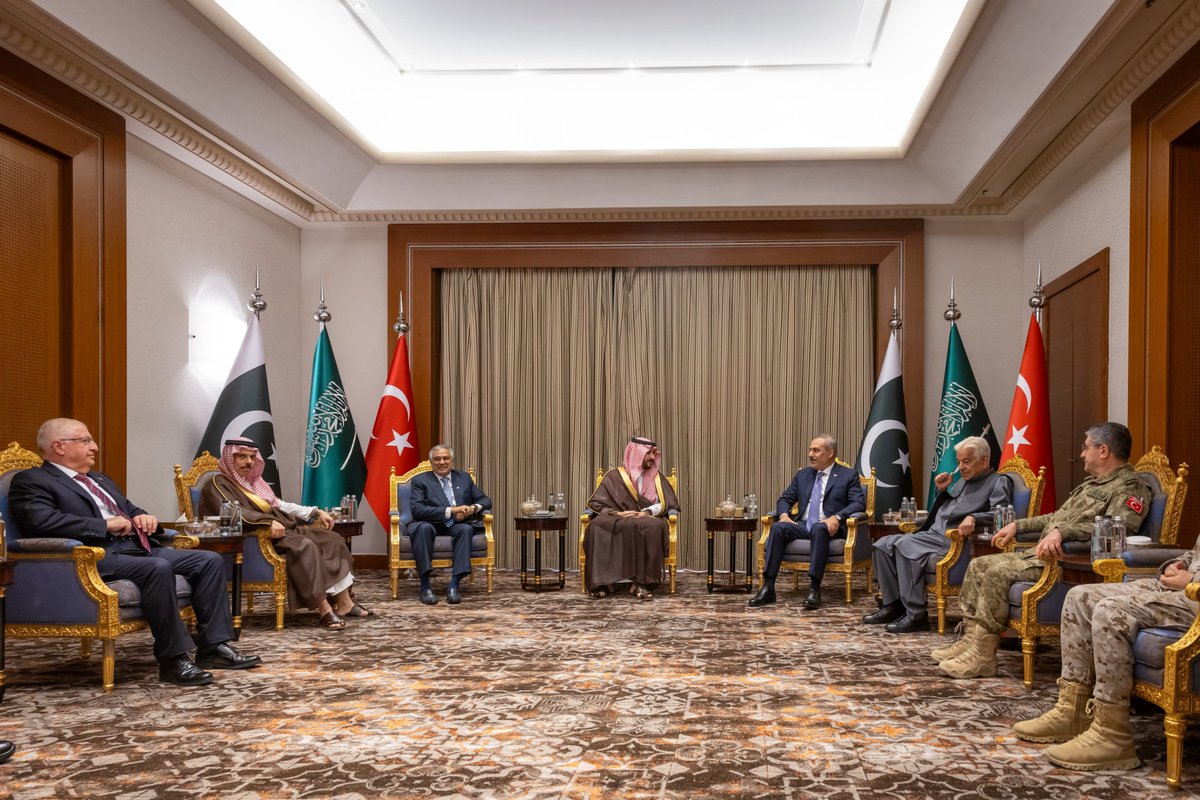
Turkey, Saudi Arabia, and Pakistan decided to put the Mecca Joint Defense Agreement into action on October 5. Accordingly, Turkey, alongside Pakistan, will deploy an agreed amount of military force to Saudi Arabia to help counter the Houthis. Ankara is planning limited participation, with mostly technical assistance. Sources in Ankara suggest that Turkey will mainly deploy air defense systems and aircraft. Turkish sources downplay these deployments and portray them as solely defensive.
However, as the collective defense mechanism of the Mecca Agreement has been initiated, Turkey has become a part of the war in Yemen, even if its participation remains as limited as Ankara intends. More importantly, Turkey has become part of something bigger: a regional conflict with Iran and its allies.
The Houthis are quite useful allies for the Iranian regime. Their attacks against energy facilities, airports, tankers, and other strategic targets multiply the impact of Iran's pressure on the US, its allies, and the global economy. Their position next to the Bab al-Mandab Strait also increases their strategic importance to Iran. In this respect, it would not be a surprise if Tehran wanted to escalate against Ankara, even if the Turkish government tries to compartmentalize its participation in the war in Yemen from the rest of the regional conflict and maintain relations with the Iranian regime.
A possible Iranian escalation against Turkey would have three stages: diplomatic and economic escalation, asymmetric attacks, and direct confrontation.
Diplomatic and Economic Escalation
Turkey's deployment of its forces in Saudi Arabia would provoke a diplomatic reaction from Tehran. Indeed, the Iranian regime has already shown its discontent with Turkey's neutrality during its war with the US. Diplomatic spats, or even a severing of diplomatic ties, would therefore not be a surprise.
Ankara's tilt toward the anti-Iran camp is not limited to the Mecca Agreement and Yemen. Although Turkey once evaded US sanctions against Iran, it now complies with the Trump administration's Operation Economic Outcast campaign, which aims to strangle the regime in Tehran. The Turkish government has already taken several economic steps, such as suspending commercial flights to and from Iran and revoking the operating license of Bank Mellat.
Yet Iran has a better weapon in its arsenal: natural gas. Turkey sourced 13% of its natural gas imports from Iran in 2025. The 25-year gas deal between the two countries expired in July 2026. Although Iran was not Turkey's top natural gas supplier, a halt in gas flows could cause serious trouble for the already struggling Turkish economy in the coming winter months. Turkey has diversified its natural gas sources in recent years, with an increasing share of US gas. Nevertheless, the Turkish energy minister says that the country still needs gas from Iran for its energy security.
Asymmetric Attacks
Turkey is accustomed to diplomatic tensions with Iran and to Iranian manipulation of its energy dependency. Turkey and Iran are regional rivals that have clashed in Syria, Iraq, and the Caucasus. Asymmetric and terrorist attacks, however, would represent an unprecedented crisis between the two countries.
During the recent Iran-US war, Iran's military escalation against the US and other regional actors marked a definitive break from its previous, much more restrained strategy. Since February 2026, Iran has not refrained from initiating escalation and broadening the scope of the conflict. In fact, it even fired four missiles toward Turkey, although Ankara had not been involved in the conflict at the time.
Turkish participation in the Yemen war could therefore trigger Iranian retaliation against Turkish targets without Tehran claiming responsibility. Turkish troops in northern Iraq, for instance, could become targets of Iran-aligned militias in Iraq. Likewise, the Baku-Tbilisi-Ceyhan pipeline, which carries 600,000 barrels of crude oil per day from the Caspian Sea to the Mediterranean, could be targeted. The fact that some of this oil goes to Israel makes it a more attractive target for Iran.
Incirlik Air Base, which hosts US forces; the NATO radar installation in Malatya; and US and Israeli diplomatic missions could also be potential Iranian targets. Moreover, hitting Turkish strategic, economic, political, or tourist targets could undermine Turkey's fragile political stability or worsen its economic troubles without Iran taking responsibility.
In response, Turkey could use PJAK and other Kurdish or dissident groups against the Iranian regime, providing them with arms and military support. Nevertheless, Turkey has more to lose than Iran, which has been under US military, political, and economic pressure for months.
Direct Confrontation
The final stage of escalation would be a direct confrontation, in which Iranian missiles and drones hit Turkish cities, as they have in Saudi Arabia, the UAE, and elsewhere. The Iranian regime has already demonstrated its readiness for such an escalation. Turkey could retaliate, but the additional cost of Turkish retaliation for Iran would be relatively limited, given that Iran has already been under intense US bombardment for months. As with asymmetric attacks, a direct confrontation could be highly costly for Turkey.
Turkey's participation in the Yemen war could go wrong in many ways. Turkish forces in Saudi Arabia could become targets of Houthi attacks. Turkey, however, is also becoming part of the broader regional conflict. Although Ankara will do its best to downplay its role in the Yemen war and maintain diplomatic ties with Tehran, the Iranian regime, with newfound confidence on the battlefield, could choose to impose costs on the Turkish government in an effort to push it back to the sidelines. This could open the door to a new stage of escalation between Turkey and Iran.
By activating the collective defense mechanism, the Turkish government is not only joining a war in Yemen but also becoming part of a regional conflict that could have much larger consequences than Ankara anticipates. As this regional war drags on, the stakes will rise for all parties, pushing them to take greater risks. Ankara may therefore find that what begins as a limited military deployment in Saudi Arabia ultimately ends centuries of relative peace between Turkey and Iran.


.svg.avif)