Key Takeaways
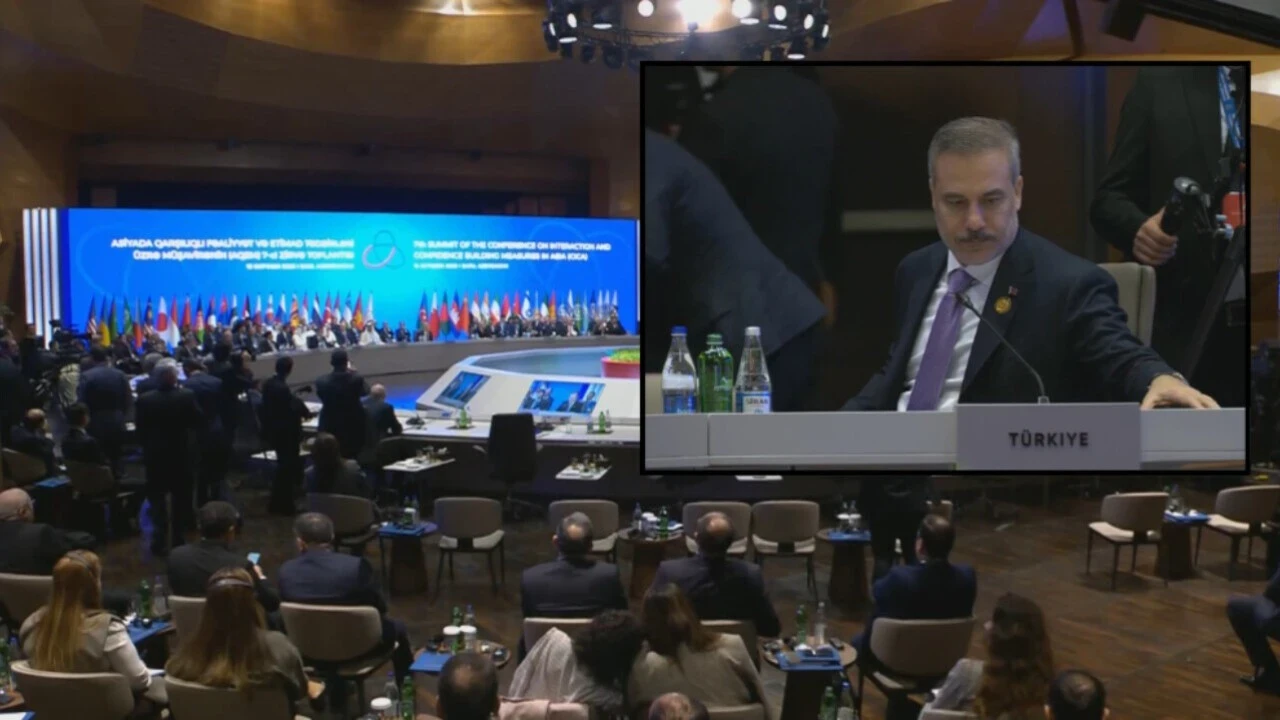
Turkish Foreign Minister Hakan Fidan’s arrival at Baku airport marked a new low in recent Turkish-Azerbaijani relations. Fidan had travelled to attend the summit of the Conference on Interaction and Confidence Building Measures in Asia (CICA), which brings together heads of state. Turkish President Recep Tayyip Erdoğan did not attend, possibly in protest against harsh remarks from Baku. At the airport, Fidan was welcomed by Azerbaijan’s Youth and Sports Minister, rather than his Azerbaijani counterpart, a move interpreted as a response from Baku. Yet, by almost every geopolitical, economic, and military measure, relations between Azerbaijan and Turkey are at their strongest point in history. The two countries are nevertheless in the midst of a diplomatic crisis unprecedented in recent years.
What Happened
The recent feud started over a domestic issue in Azerbaijan that has cultural ramifications for Turkey. In mid-September, Azerbaijan adopted a school dress code that bars clothing contradicting “the principle of secular education,” in effect banning headscarves in classrooms. Footage of students turned away from school spread on Turkish social media, and protesters gathered outside Azerbaijan’s consulate in Istanbul.
On October 2, Aliyev told his party’s congress, “We do not need anyone’s help or protection. When we needed help, nobody helped us. When we found ourselves with a million refugees, nobody lent us a hand. Everything we have received, we have bought with our own money, weapons included, right down to the very last bullet.” He named no one, but in Turkey the remarks were read as downplaying Ankara’s role in the Karabakh victories of 2020 and 2023.
On October 12, Erdoğan’s chief adviser Oktay Saral called on Baku to reverse the ban. The next day, Azerbaijan’s ruling party dismissed criticism from ruling-party circles in Turkey as “systematic and openly slanderous.”
Closer and More Connected Than Ever
Cultural and historical ties have always given relations between the two countries a unique character. However, stronger political ties, deeper energy cooperation, and growing military cooperation in recent years have taken bilateral relations far beyond cultural closeness alone.
Azerbaijan’s role as one of Turkey’s most important energy suppliers is a significant aspect of bilateral relations. Since 2006, the Baku-Tbilisi-Ceyhan pipeline has transported 600,000 barrels of oil per day from the Caspian Sea to the Eastern Mediterranean, some of which goes to Israel. Meanwhile, the TANAP project delivers Azerbaijani natural gas to both Turkey’s domestic market and Europe. The two countries aim to further expand their energy cooperation through new projects.
The Karabakh wars, meanwhile, ushered in a new era in relations between the two countries. Turkey’s provision of drones to Azerbaijan, its technical support and—although this may not have been publicly disclosed—the deployment of combat forces played a significant role in Azerbaijan’s two decisive victories over Armenia. Today, Turkey, Azerbaijan, and Uzbekistan are conducting joint military exercises in Karabakh, which Azerbaijan took from Armenia. Military ties have also shaped cooperation in the defense industry, with Azerbaijan becoming one of the most important customers of Turkey’s defense industry. At Azerbaijan’s defense industry fair, Baku signed defense contracts with Turkey worth $500 million.
The positive momentum in bilateral relations cannot be understood in isolation from the wider regional context. Geopolitical developments in recent years, particularly the wars in Ukraine and Iran, have elevated relations between the two countries to a new level. Following the dissolution of the Soviet Union, Russia and Iran were the main powers limiting Turkey’s influence in the Caucasus. However, Russia’s preoccupation with the war in Ukraine since 2022 and Iran’s attrition from Israeli and American attacks since October 7, 2023, have not only opened up more room for Turkey in the region but also freed Azerbaijan from pressure exerted by these two major powers.
Convenient Disagreement: Israel
Relations with Israel are a sensitive issue for both Ankara and Baku. Since 2009, Turkey-Israel relations have been turbulent. Despite several attempts at diplomatic normalization, ideological differences have repeatedly pushed the two countries into new crises. Following the fall of the Assad regime in Syria in 2024, the Turkish-Israeli rivalry took on a geopolitical dimension, as the two countries held conflicting views on Syria’s future. More importantly, both came to see the other as a national security threat.
While Turkish and Israeli politicians exchange threats on a daily basis, Baku has maintained cordial relations with Tel Aviv. Israel imports 40–60 percent of its oil from Azerbaijan, while Azerbaijan imports 69 percent of its “major weapons” from Israel.
In this context, Israel might appear to be a major source of friction in Turkish-Azerbaijani relations. Hakan Fidan’s departure, along with other leaders, during Israeli President Isaac Herzog’s address at the CICA summit could reinforce this perception.
Yet differing Turkish and Azerbaijani positions on Israel have not prevented their relations from deepening. Turkey still transports Azerbaijani oil to Israel. Azerbaijan, meanwhile, acted as a mediator between the two countries when tensions escalated in Syria in 2025. Indeed, Azerbaijan’s friendly relations with Israel do not appear to be a problem for Ankara. On the contrary, Turkey benefits from this relationship.
Real Challenges
Despite this overall positive trend, two significant and interrelated risks remain in the relationship. Despite their cultural and historical affinity, ideological differences between the two countries’ governments, both of which are authoritarian, may occasionally lead to diplomatic crises. While the Turkish government uses Islamic rhetoric, the Azerbaijani leadership, which emerged from the Soviet Union’s secular elite, maintains a more distant stance toward religion. In particular, its perception of Shiism, which is widespread among the Azerbaijani population, as a significant threat reinforces this sensitivity toward religion.
In practice, however, Ankara has pursued a pragmatic foreign policy, particularly since 2020, pushing ideological considerations into the background. Consequently, Azerbaijan’s secularism is not an issue in itself for Ankara. However, as the recent headscarf controversy has shown, if this sensitivity translates into concrete policies in Azerbaijan, it could provoke a backlash against the Aliyev administration in Turkey, which could then spill over into diplomatic relations.
The second major risk stems from differing views in Ankara and Baku on the nature of their bilateral relationship. Turkey generally sees itself as the “big brother” in the region, and this perspective also shapes its relations with Azerbaijan. With a population of around 10 million, Azerbaijan is a relatively small country situated between Turkey, Iran, and Russia. However, for the Baku administration, which has only recently begun to free itself from Russian and Iranian influence, this does not necessarily mean seeking shelter under Turkish influence. Instead, the Azerbaijani government will seek to reduce its dependence on Turkey by developing relations with Israel, the US, and other Western countries.
The recent crisis between Turkey and Azerbaijan reflects the poor diplomatic management of these two challenges. Azerbaijan’s ban on headscarves in schools provoked a backlash in Turkey. The headscarf issue is highly sensitive in Turkey and has played an important role in President Erdoğan’s political career. Ankara therefore could not ignore such a ban in a country with which it has cultivated such close ties.
The Azerbaijani government, however, tends to overreact in its diplomacy, both positively and negatively. When relations are good, Baku creates a very positive atmosphere. Yet it can also react excessively to even minor issues that are bound to arise in any relationship as seen in Aliyev’s statements. Although Aliyev did not mention Erdoğan by name, his remarks were directed at him.
The recent crisis between Turkey and Azerbaijan highlights the importance of diplomacy. Trade, connectivity, and geopolitical alignment do not automatically translate into good relations. Diplomacy is needed to turn these shared interests into constructive relations between the two countries. Indeed, the ideological and geopolitical differences between Turkey and Azerbaijan are relatively minor compared with the strength of their military and economic ties, which have grown amid the wars in Ukraine and Iran. Yet Ankara and Baku have managed these differences poorly, allowing them to fuel a diplomatic crisis.




.svg.avif)